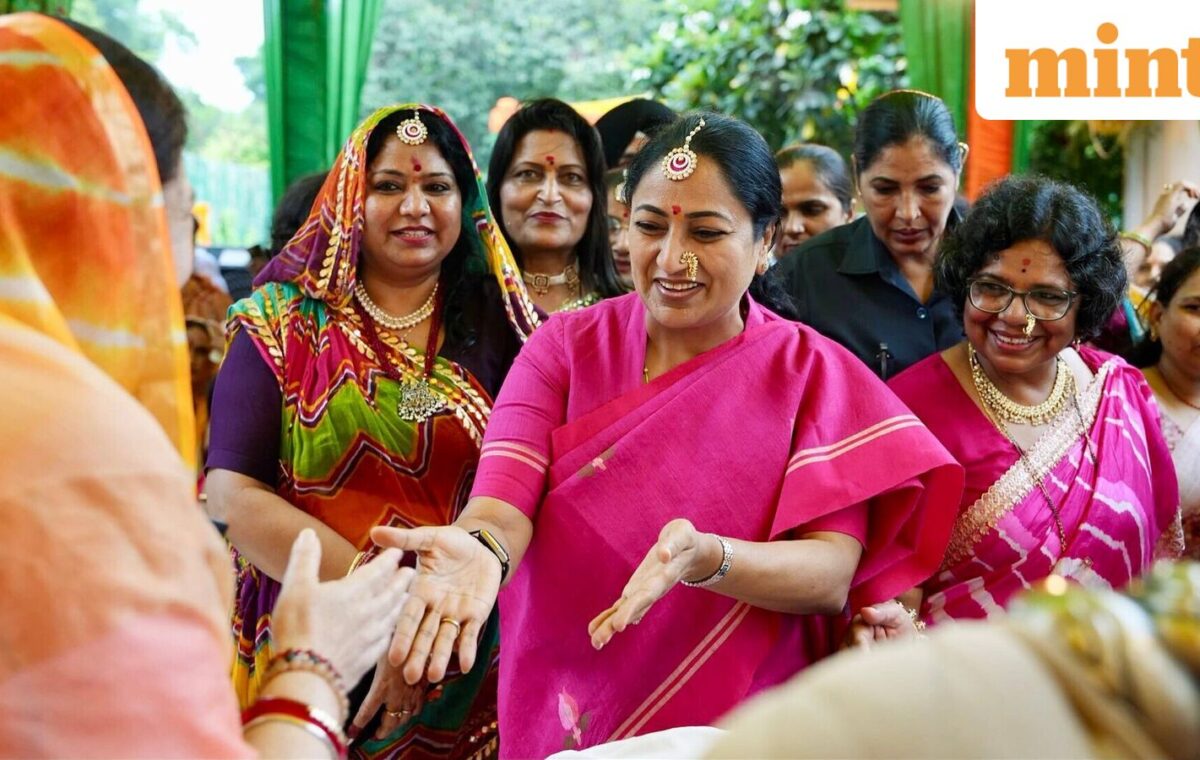
Chief Minister Rekha Gupta-led Delhi government launched the Delhi Lakshmi Yojana, or the Mahila Samriddhi Yojana, on 1 August, providing ₹2,500 per month to eligible women residents. With this, Delhi has just been added to the long list of states and Union Territories running direct cash schemes for women.
As things stand, more than 15 states have unconditional cash transfer schemes for women across India, costing roughly ₹2.68 lakh crores and reaching almost 120 million beneficiaries. These schemes provide regular unconditional monthly payments ranging from ₹1,000 to ₹2,500 to support financial independence and recognise unpaid household labour.
India’s growing direct cash transfers has triggered a familiar debate: Are such schemes an effective tool of welfare, or are they simply political freebies?
A recent working paper by the Economic Advisory Council to the Prime Minister (EAC-PM) adds an important dimension to the debate. Drawing on monthly transaction data from more than 1.6 lakh State Bank of India accounts, the study examined the impact of Maharashtra’s Ladki Bahin Yojana and Odisha’s Subhadra Yojana — two unconditional cash transfer (UCT) schemes aimed at women.
One of the key findings of the working paper was that the impact of cash transfers went beyond the women who received the money in their bank accounts. In Maharashtra, male relatives of Ladki Bahin beneficiaries saw their month-end bank balances rise by 23 per cent, while their spending fell by 49 per cent, the study found
This could be explained by changes in financial behaviour within households, experts said.
With women having a regular and independent source of income, other family members may face less pressure to meet everyday expenses, according to Pankhuri Shah of Project DEEP, an organisation focused on research and evidence-based approaches to welfare and direct cash transfers.
“The EAC-PM study links this wider impact to financial shifts within the household,” Shah told LiveMint.
With women receiving a steady, independent income, relatives face less pressure to cover daily expenses, Shah said. This is evident in Maharashtra, where relatives saw a 23 per cent increase in month-end bank balances and a 49 per cent drop in spending, she added.
“Both global and Indian evidence, including Project DEEP’s data, indicate that cash transfers effectively stabilise consumption (via small amounts), improve productive asset generation (via lump-sum amounts), and cushion against crises, making them an important tool of development,” she said.
However, this does not replace other essential welfare objectives of the government, such as ensuring quality health, nutrition and education, amongst others, according to Shah.
“It is an important component of the welfare portfolio, not the only one.”
One of the conclusions drawn from the EAC-PM study said that both programmes in Maharashtra and Odisha should be sustained and evolved toward cash-plus architectures that combine the income transfer with voluntary capacity-building, digital literacy, and Self-Help Group linkage components.
“Beneficiary targeting should be strengthened progressively through hybrid multidimensional verification frameworks that enhance precision while ensuring no deserving woman is excluded. Transfer amounts should be reviewed periodically for adequacy in light of inflation and evolving household expenditure patterns, with efficiency gains from improved targeting deployed to fund enhanced benefits and complementary services for beneficiaries,” it says.
Akshay Modi of Sattva Consulting also pointed to evidence from more than 100 studies on unconditional cash transfers. Such schemes have been associated with improved food security, higher incomes and savings, increased spending and better psychological well-being. Recipients are also more likely to repay debts and remain employed, while their children are more likely to be enrolled in school.