Published: 21:07 BST, 11 August 2026 | Updated: 23:58 BST, 11 August 2026
The US has issued its highest travel warning, urging Americans to avoid multiple African provinces as a deadly Ebola outbreak has already claimed thousands of lives.
The CDC issued a Level 4 travel health notice for Ituri and Nord-Kivu provinces in the Democratic Republic of the Congo, urging Americans to avoid all travel to the region, an escalation from its first advisory, which was a Level 2 on May 18.
The agency also issued a Level 3 warning for Haut-Uele and Tshopo provinces, also in the DRC, urging travelers to reconsider non-essential visits and recommending enhanced precautions for all other parts of the country.
The outbreak, caused by the Bundibugyo virus – a rare strain of Ebola with a case fatality rate that historically can range from 25 percent to 50 percent – has overwhelmed healthcare systems and sparked fears of international spread.
The virus, for which there is no vaccine or treatment, causes viral hemorrhagic fever, a severe and often fatal illness that damages blood vessels, with symptoms including fever, headache, muscle pain, weakness, diarrhea, vomiting, stomach pain and late-stage bleeding or bruising.
In addition to the travel advisories, the US has also imposed temporary travel restrictions barring travelers, including American citizens who have been in the DRC within 21 days, from boarding commercial flights to the US.
All US citizens and nationals who have been in the DRC must plan to travel to another country for 21 days before entering the United States.
For those who have been in neighboring Uganda or South Sudan – both of which have confirmed Ebola cases linked to the DRC outbreak but are not experiencing a widespread, independent outbreak – entry into the US is only permitted through four designated airports that have enhanced screening measures in place.
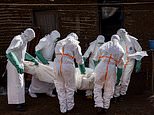
Health workers in full protective gear prepare to transport an Ebola victim's body for a safe burial at Sofepadi Hospital in Bunia, Democratic Republic of the Congo, on May 23
As of August 9, CDC and WHO data show 4,381 confirmed cases and 2,011 confirmed deaths in the DRC, plus 20 confirmed cases and two deaths in Uganda, bringing the combined outbreak total to more than 4,400 confirmed cases and over 2,000 confirmed deaths linked to the Bundibugyo virus.
Exact figures remain difficult to confirm, however, due to challenges in surveillance and reporting in conflict-affected regions.
And health officials have warned that the virus was spreading for weeks before it was detected.
A Lancet study cited by WHO found that retrospective investigations suggest transmission began in early April, meaning the virus circulated undetected for roughly six weeks before the outbreak was officially declared on May 15.
Ituri and Nord-Kivu provinces in the DRC have been particularly hard-hit, with healthcare facilities struggling to contain the virus amid ongoing insecurity and community resistance.