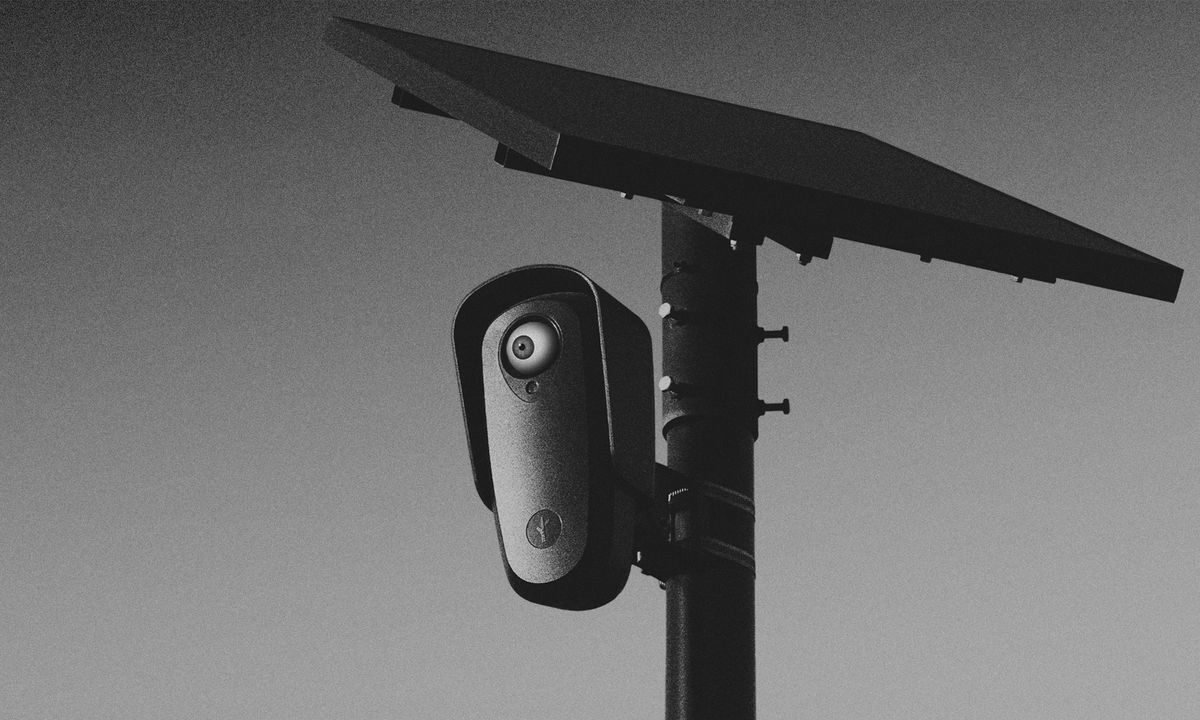
The debate pits civil liberties against public safety
Resistance is growing against the Flock surveillance cameras used by police departments across the country. Some cities are terminating their contracts with the company. In other cases, individuals are taking matters into their own hands by stealing or vandalizing the devices they say intrude on their privacy. And it all raises the question of how much surveillance is too much.
Flock’s “original promise” was to provide an AI-driven system that “discourages speeding, hit-and-runs and right turns on red,” said Bloomberg. But its devices, known as automatic license plate readers, also work as a “crime-fighting tool.” The system is now a symbol of “government’s growing obsession with keeping a constant eye on those it exists to serve,” said legal scholar Stephen L. Carter to the outlet.
The Flock mechanism has reportedly been used to “stalk women, hunt down marijuana users, deport immigrants and surveil households,” said Bloomberg. And the anger sparked by those stories has resulted in “dozens of police departments” terminating contracts with the company.
Escape your echo chamber. Get the facts behind the news, plus analysis from multiple perspectives.
From our morning news briefing to a weekly Good News Newsletter, get the best of The Week delivered directly to your inbox.
From our morning news briefing to a weekly Good News Newsletter, get the best of The Week delivered directly to your inbox.
The “fear of Big Brother watching you is not new,” said Sara Pequeño at USA Today. The Flock backlash “doesn’t mean these cameras are disappearing any time soon.” ICE has partnered with AI companies to implement facial recognition programs, stores are “implementing AI surveillance pricing” that uses your shopping habits to determine your grocery bills, Meta sells glasses that can record video, and Ring cameras have made front porches “visible to the whole world.” So “why are we just watching America become a surveillance state”?
Surveillance “puts public safety first,” said Rick Pozniak at The Boston Herald. The system saves police precious time “locating an abducted child or tracking a rapist or recovering a stolen vehicle” and can also help investigators “reconstruct the movements of vehicles involved in serious crimes and accidents.”
The information gathered by such systems should be “governed by strict protocols,” but to entirely reject technology that is “imperative to safety and protection of local residents would be a mistake,” said Pozniak. Police should be provided the “tools they need” alongside rules that offer the “accountability we deserve.”
Efforts to ban Flock systems are an “overreaction,” said Charles Fain Lehman at The Atlantic. The U.S. is already a “surveillance-saturated society,” but police cameras can “help make the criminal-justice system both fairer and less punitive.” The system can “help police catch criminals” and also theoretically discourages crime by “increasing the certainty” of being arrested when committing an offense. Dumping the cameras “would be foolish.”
The backlash is “becoming a cross-party political issue,” said NewsNation. Reps. Tim Burchett (R-Tenn.) and Thomas Massie (R-Ky.) have introduced bills to restrict license plate readers, while Michigan Democrats are trying to stop state departments from cooperating with federal agencies that use the systems. The public expects the government to “protect both their safety and their constitutional rights,” said the Wolverine State Democrats in a letter to the Michigan Department of Transportation.
Joel Mathis is a writer with 30 years of newspaper and online journalism experience. His work also regularly appears in National Geographic and The Kansas City Star. His awards include best online commentary at the Online News Association and (twice) at the City and Regional Magazine Association.