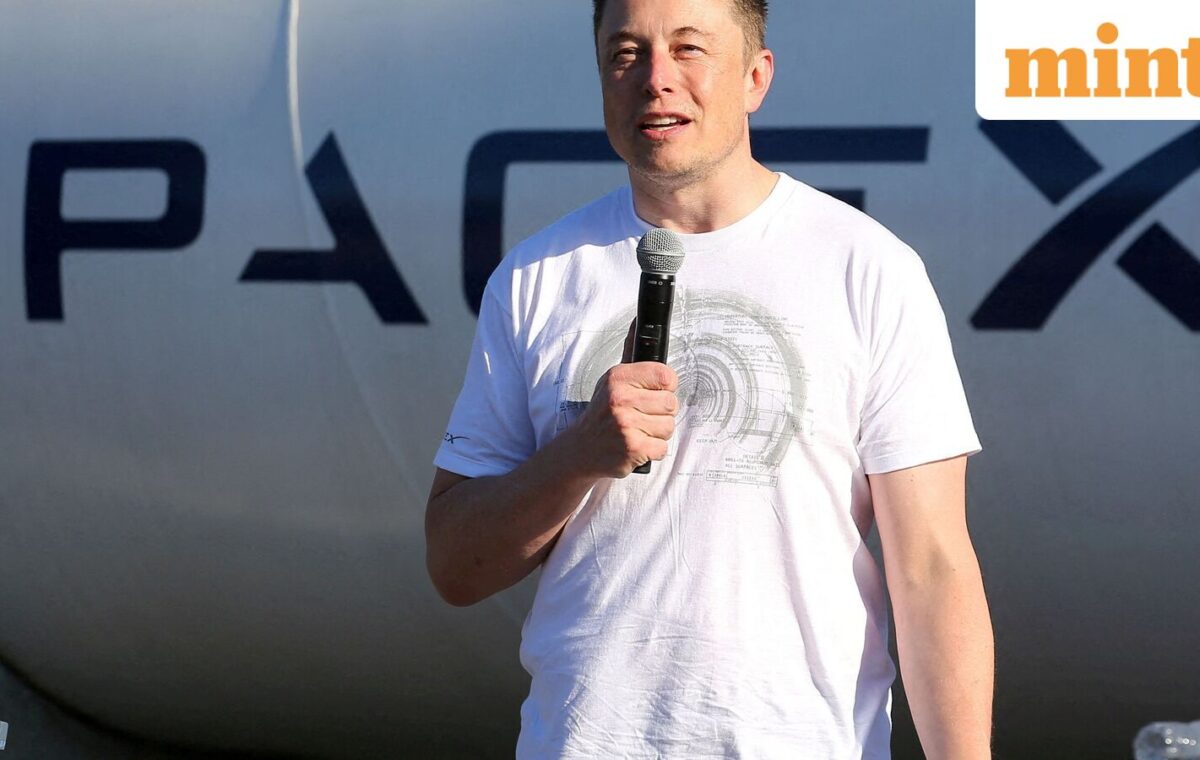
SpaceX’s earnings call last week took a bigger turn as Elon Musk unveiled a major Nvidia tie-up.
Musk said SpaceX will deploy Nvidia’s Vera Rubin NVL723 AI systems both in space and on the ground. SpaceX will also work with Nvidia to develop the Starmind AI1 satellite computing payload. “Each of the Starmind satellites will include Nvidia Rubin GPUs and Vera CPUS for data centre-class space compute”
Noting that SpaceX will go exclusive with Nvidia, Musk noted that it would mark the next step in SpaceX's plans to put AI-centric data centres in orbit.
SpaceX's partnership with Nvidia involves deploying Nvidia's Vera Rubin NVL723 AI systems in space and developing the Starmind AI1 satellite computing payload, which will utilize Nvidia Rubin GPUs and Vera CPUs.
AI spending in sectors like aerospace and healthcare is significant as they are expected to become major consumers of AI applications, driven primarily by inference needs rather than directly purchasing GPUs.
Nvidia's $500 billion financing plan aims to help customers build AI infrastructure without relying solely on their own resources, creating long-term capital opportunities linked to usage and revenue from AI compute.
SpaceX's exclusive deal with Nvidia signals that AI demand is expanding beyond traditional hyperscalers, suggesting a shift towards AI-centric data solutions in varied sectors.
Yes, industries like manufacturing should consider investing in AI applications as they will drive demand across various AI workloads, enhancing efficiency and operational capabilities without needing to buy hardware directly.
“Now, that's exactly the kind of signal Wall Street loves because it shows AI demand is expanding beyond the usual hyperscaler,” Sidharth Sogani is CEO of Blue Aster Capital (Bahrain) and CREBACO Global.
But, the investors need a reality check. “SpaceX isn't really a 'beyond Big Tech' customer in the way people are framing it. They already operate Colossus data centres and have been renting out spare GPU capacity to companies such as Anthropic and Google. It's more about the definition of a hyperscaler quietly expanding.”
Adding to this, Ankush Tiwari CEO and Founder of pi-labs, says, “I would read the word exclusive carefully. When a customer of this size commits entirely to one vendor, that is rarely a purely technical decision. There is almost always commercial architecture behind it, whether allocation priority, pricing, or co-design access, that is not visible in the announcement.”
“Yes, and I am really excited about that part,” says Sogani, adding, “Putting GPUs in orbit for real-time geospatial processing and flight analytics opens up an entirely new deployment environment.”
But, think of this market in layers, explains Tiwari.
The first layer is building capacity, which is the hyperscalers, and that phase is well underway. The second layer is building solutions, which is the model builders. But neither of those is where the volume ultimately sits.
Beyond capacity and models, the compute gets consumed by application builders. That is where the scale comes from. Aerospace, manufacturing, healthcare and energy will show up as the next leg of demand, but mostly not as direct GPU buyers. But they are unlikely to buy GPUs directly. Instead, they will use AI applications built for their needs.