I would like to be emailed about offers, events and updates from The Independent. Read our Privacy notice
Dogs have been known as man’s best friend for decades, but new research has helped uncover even more about our furry friends.
It turns out that Fido, Princess, and Reginald the Pawsome Destroyer can distinguish between our emotions just by looking at our faces.
Researchers had previously found that dogs were able to interpret laughs, frowns and tears, but the biology had largely been unexplored, according to scientists at Austria’s University of Vienna.
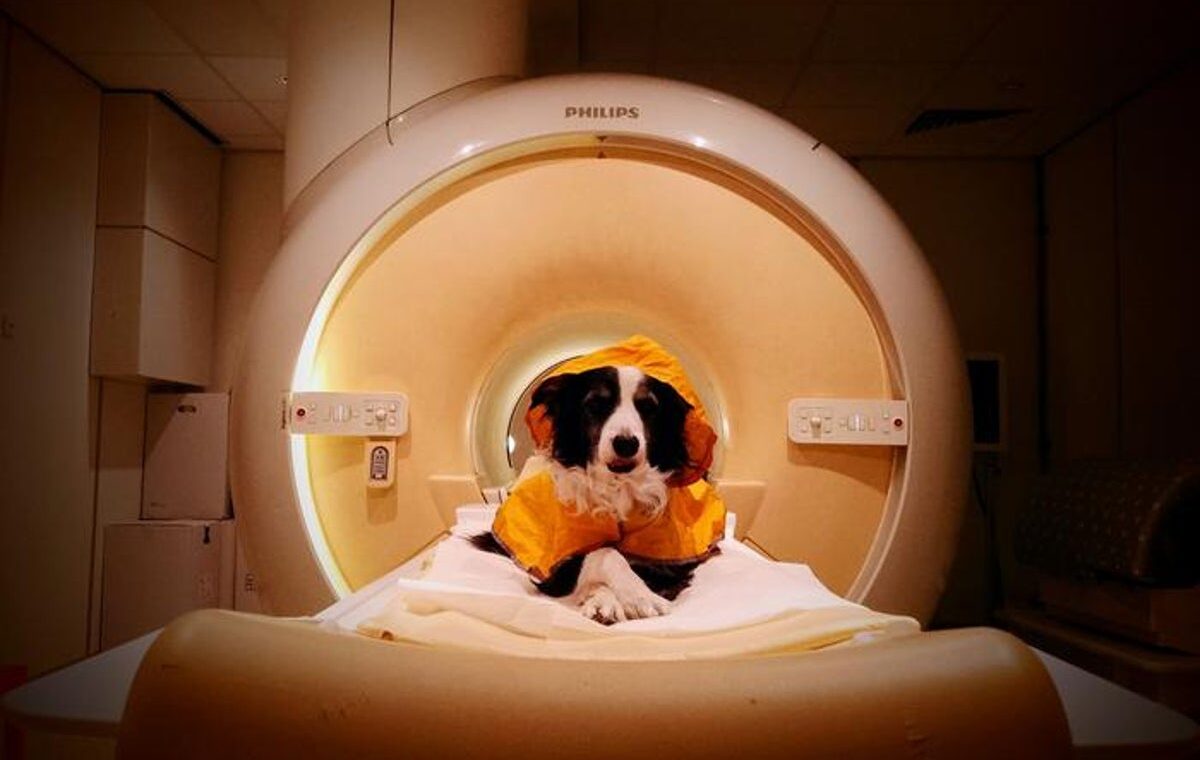
Looking inside the brains of dogs using brain scans has provided the first evidence that dogs can distinguish between negative facial expressions — though maybe in a different way than humans.
“Humans are really good at picking up small details on the face, and so are dogs,” Raúl Hernández-Pérez, the first author of the corresponding study, said in a statement.
“By studying their brains, we can understand what adaptations have developed to support their remarkable social and emotional understanding of humans,” he said.
The research was fairly small, including over a dozen young dogs volunteered by their owners, who were not compensated in any way. The dogs were different breeds, including border collies, a Labrador retriever and a golden retriever.
All of the dogs were well socialized with humans and other dogs and some dogs had previously participated in similar experiments and were already trained to lie still in a scanner.
After the other dogs were trained to lie still and wear headphones to protect their hearing inside the machine, the researchers took the scans.
The scans were fMRI scans: a type of scan that shows which areas of the brain are most active.
The dogs, which were able to leave the sessions at any time, were shown still images of people displaying happiness, anger, fear and sadness.
These scans occurred over the course of minutes and dogs must spend a minimum of six minutes in the machine for a proper scan to be produced, the researchers told TIME.
The scans revealed that dogs’ brains had different responses for different emotions.
Seeing happy faces lit up the dogs’ temporal cortex and caudate nucleus, which are regions tied to higher cognitive and reward processing, respectively.