This is read by an automated voice. Please report any issues or inconsistencies here.
See more from the L.A. Times in Google Search. Set us as preferred
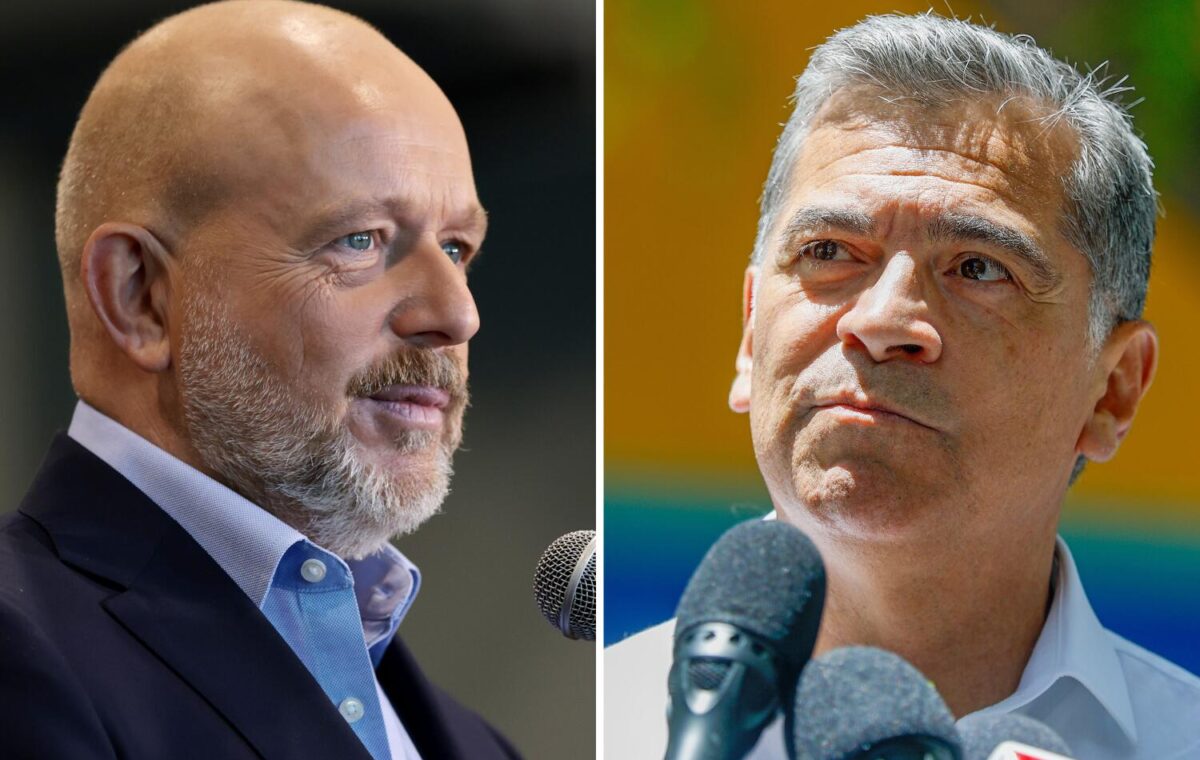
After a primary campaign filled with twists, turns and scandal, the election to determine California’s next governor has narrowed to two candidates: Xavier Becerra, a Democrat and veteran of California politics, and Steve Hilton, a Republican immigrant and ally of President Trump.
The two have similar origin stories as the sons of working-class immigrants — both even worked construction jobs to earn money as teenagers — but they have vastly different visions for California’s future. If elected, Becerra promises to solidify many of the state’s liberal policies and its opposition to Trump; Hilton pledges to reverse course by cutting taxes, ending regulations and shrinking state government.
The race is open because after two terms at the state’s helm, outgoing Gov. Gavin Newsom is blocked from running again. He has endorsed Becerra and is considering a run for president in 2028.
In a state where Democratic voters outnumber Republicans by nearly a two-to-one margin, Hilton has acknowledged his campaign is an uphill battle. Since the primary he has focused on reaching out to independent voters and making the case that after 16 years of Democratic control, poverty and wealth inequality in California have only worsened.
As the Nov. 3 general election nears, both have begun articulating their agendas, courting voters and lobbing attacks at one another.
Here’s more about the two candidates, along with their stances on a few top issues.
Top job: U.S. secretary of Health and Human ServicesBiggest splash: As California attorney general, sued the Trump administration roughly 120 times.Particulars: Becerra, 68, lives in Sacramento with his wife, Dr. Carolina Reyes, and they have three adult daughters. Born in Sacramento, he is the son of Mexican immigrants: His mother was a clerical worker and his father picked vegetables, worked in construction and had other jobs. He is a Democrat.
Once considered an underdog among the many Democrats vying to replace Newsom, Becerra shot to the top of the polls after former Rep. Eric Swalwell dropped out of the race after he was accused of sexual assault and misconduct. In the scandal’s aftermath, several of Swalwell’s campaign advisors jumped to Becerra’s team. Voters in search of a new candidate said they were drawn to Becerra’s calm demeanor and decades of experience in government.
He finished first in the June 2 primary with 28.1% of the total vote. Under California’s top-two primary system, all candidates were listed on the same ballot, regardless of party, and first and second place finishers advanced to the Nov. 3 general election.
Xavier Becerra was polling at around 4% in numerous polls taken in February, March and early April. Then, he surged.
A steady, if inconspicuous, presence in California Democratic politics over the years, Becerra is largely perceived as a risk-averse candidate who would continue the status quo if he is elected.
The son of working-class Mexican immigrants — his mother was from Guadalajara and his father was born in Sacramento but raised in Tijuana — Becerra grew up in Sacramento with three sisters. In high school, Becerra convinced a classmate to hand over their unused application to Stanford University rather than throw it away. He filled it out and was accepted, becoming the first in his family to attend college, and graduated with degrees in law and economics.
Following a brief period doing legal aid work in Massachusetts while his wife finished medical school, Becerra returned to California to work as a legislative staffer for former state Sen. Art Torres and a deputy attorney general. Within a few years, he was recruited to run for a San Gabriel Valley Assembly seat.