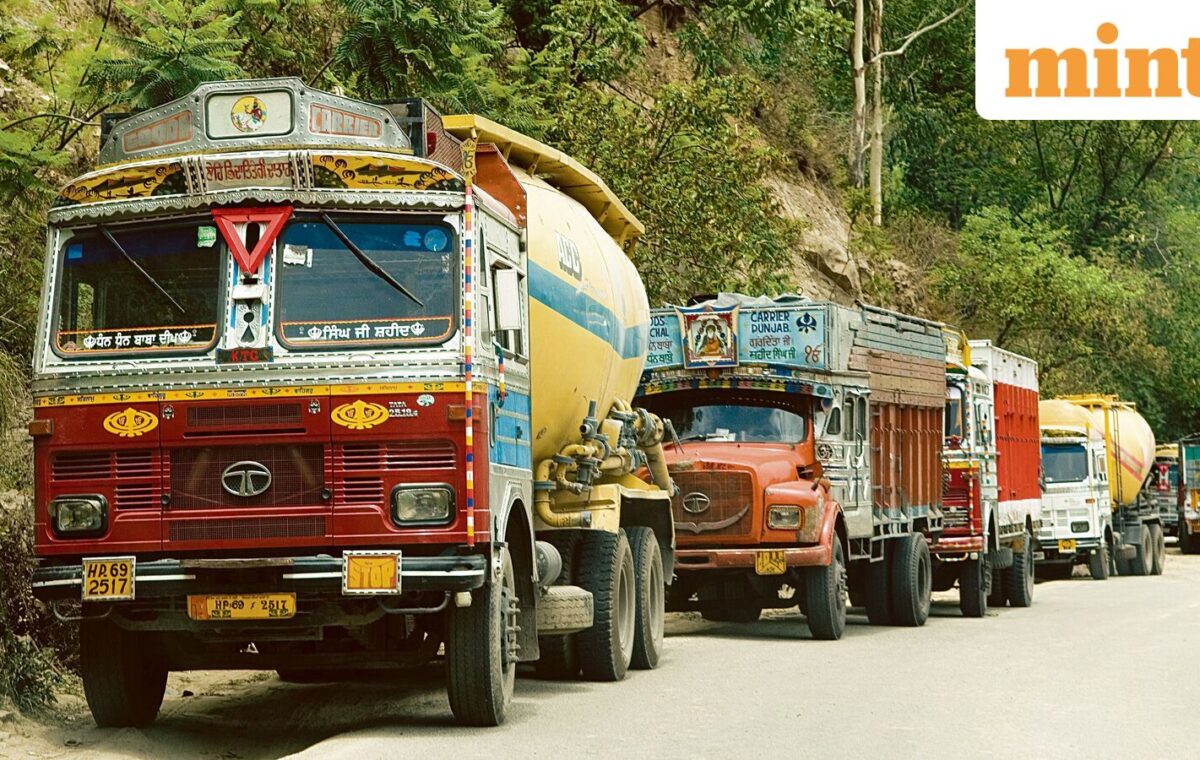
The Bureau of Energy Efficiency (BEE) will periodically review the development of Bharat Vecto amid a standoff with the automobile industry over implementing stricter Constant Speed Fuel Consumption (CSFC) testing protocol for medium and heavy commercial vehicles, according to two people aware of the matter.
In recent consultations between the government and industry over the CSFC norms, the BEE, which comes under the Union power ministry, conveyed that the tool (Bharat Vecto) “should not be developed as a black box”, said the first of the two persons on condition of anonymity.
“One of the key outcomes of the consultation was that the BEE and the Arai (Automotive Research Association of India) will hold periodic review meetings on Bharat Vecto from now onwards so that the BEE can also understand the methodology used,” said the second person, also on condition of anonymity.
Bharat Vehicle Energy Consumption Calculation Tool, or Bharat Vecto, simulates the real-world conditions of Indian roads and tests the fuel efficiency of commercial vehicles. Based on the European vehicle energy consumption calculation tool (Vecto), it's being developed by Arai.
The auto industry wants Bharat Vecto to replace the proposed CSFC test for measuring truck fuel efficiency. Unlike the CSFC test, which involves driving vehicles at 40kmph and 60kmph on test tracks, Bharat Vecto is designed to reflect real-world Indian operating conditions, according to automakers.
The ARAI, which started developing Bharat Vecto with direction from the Union road transport and highways ministry in January 2025, plans to launch it for diesel vehicles by December 2026, according to the testing agency’s website.
However, the tool is likely to take longer to be developed and for the industry to standardize its use, according to the people cited above.
Mint reported on 5 August that a year-long deadlock persists as the industry pushes for Bharat Vecto to be standardized before the new CSFC norms take effect, while the government remains committed to implementing them from April 2027.
Mint's queries emailed to the BEE, power ministry, road transport and highways ministry, and truck makers Tata Motors, Ashok Leyland, and Montra Electric on 5 August remained unanswered.
Although trucks account for less than 5% of vehicles on Indian roads, they generate about 33% of the country's transport-related carbon dioxide emissions. India sells 800,000-900,000 trucks annually, and the market is valued at $20.18 billion, according to Mordor Intelligence.
Like the Corporate Average Fuel Efficiency (CAFE) norms for cars, the CSFC framework measures the average emissions of a manufacturer's fleet each year. It sets limits on emissions per kilometre as well as the amount of fuel or power consumed over a given distance.
Improving truck fuel economy through cleaner technologies is critical as India pursues its 2070 net-zero target and seeks to reduce its dependence on crude oil imports.
Experts say Bharat Vecto can serve as a clear baseline for truck fuel-economy assessment in the country, as Indian driving conditions and truck use cases can differ from those in other global markets.
“Bharat Vecto is being designed as a simulation tool to test real-world fuel consumption in Indian driving conditions for various truck duty cycles and configurations. Having a tool which can simulate actual conditions, including drive and duty cycles, condition of roads, truck model designs, vehicle component level data, etc., can give a clearer view of the vehicle’s fuel economy that will be recorded after sale," said Ashim Sharma, senior partner and business unit head at Nomura Research Institute (NRI) Consulting and Solutions, India.
Manas is a New Delhi-based journalist with Mint, where he covers the intersection of economic policy, industry, and emerging sectors shaping India’s growth. He writes on government regulation, manufacturing, and the clean energy transition, with particular depth in areas such as electric mobility, battery ecosystems, and rare-earth supply chains. He has written on India’s efforts to build domestic capacity in electric vehicles and energy storage, as well as the broader push to reduce import dependence and strengthen supply chain resilience. His reports are not limited to capturing the headline; they also aim to explain complex policy simply.<br><br>Manas has studied law in Pune, the city where he grew up, followed by a business journalism diploma from the Asian College of Journalism in Chennai. In his almost two years of being a correspondent for Mint, Manas has reported as major wars unfolded, a general election brought surprises for both the ruling party and the Opposition, and three Union Budget announcements where India has charted its economic course for the days to come.<br><br>On vacation, Manas plays bass guitar with his friends in Space & Co, their jam-rock band. He also likes cats, and occasions of late-night snacking.