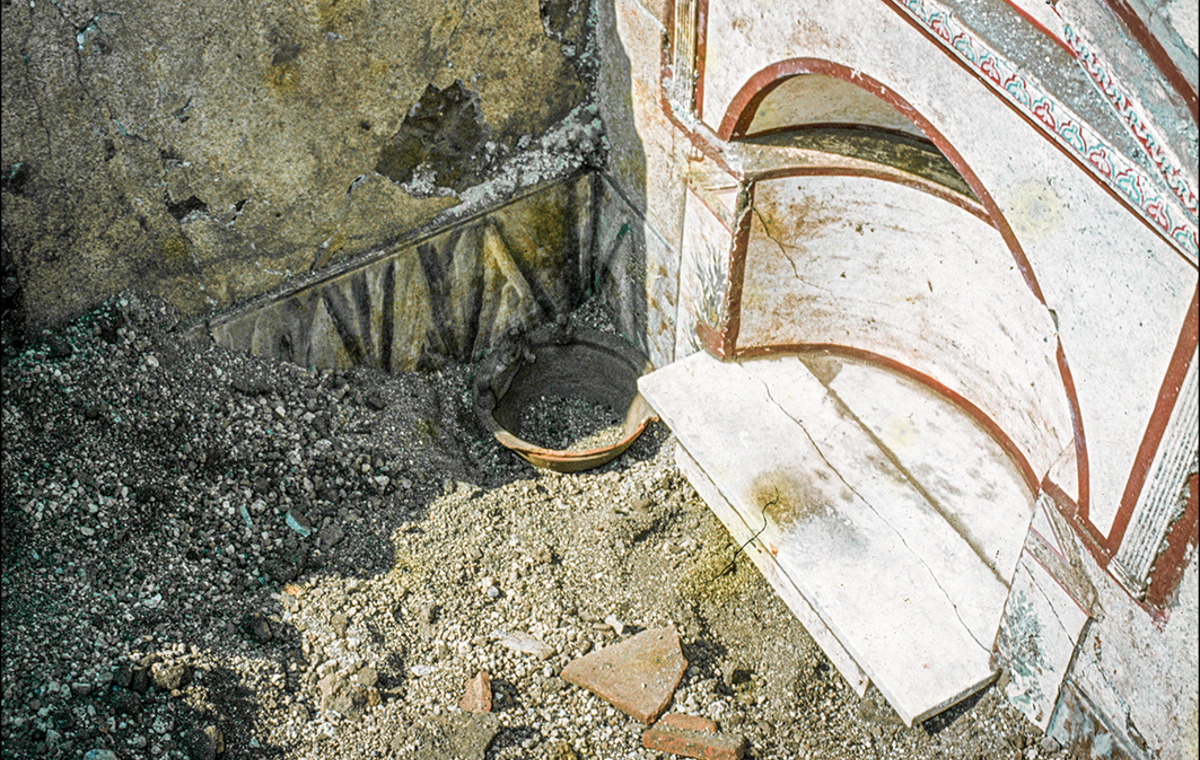
Researchers found exotic tree resin in domestic incense burners that likely came from Asia or Africa
I would like to be emailed about offers, events and updates from The Independent. Read our Privacy notice
Some households in Pompeii burned incense that likely came from Asian or African forests, connected via a global trade network, according to a new study.
The Roman city was buried under volcanic ash when Mount Vesuvius erupted in 79AD, with most of its people dying from asphyxiation and thermal shock.
Pompeii’s destruction, however, also preserved ash residues on household altars. “Incense burners are frequently excavated at Roman period sites, attesting to acts of combustion within domestic ritual practices, but what was burnt is still uncertain,” researchers said in a study published in the journal Antiquity.
Researchers analysed, for the first time, what was put in household incense burners in Pompeii as offerings for their gods and found incense sticks made from native plants as well as from aromatic substances imported from Asia or Africa.
“The results indicate that woody plants were burnt in both censers, either as fuel or offerings, alongside stone fruit or laurel plants and possibly wine or grapes, while traces of Burseraceae resins, originating from Asia or sub-Saharan Africa, provide the first archaeological evidence of incense offerings in the Pompeian domestic cult,” they wrote.
In the study, researchers analysed ash from ritual vessels using a range of state-of-the-art laboratory techniques. “We can now pinpoint which fragrances were actually burned in Pompeian domestic cult practices,” said Johannes Eber, an author of the study.
“Alongside regional plants, we found traces of imported resins, an indicator of Pompeii’s far-reaching trade connections,” Dr Eber, an archaeologist from the University of Zurich, added.
In one of the vessels, researchers found exotic tree resin that probably came from the tropical regions of Asia or Africa. “Odoriferous resins from Arabia and the African and Asian rainforests were traded alongside commodities from India and sub-Saharan Africa, moving northwards across the Red Sea from at least the first century BC,” they wrote. “The goods were eventually shipped via Alexandria to Italy through Portus and Puteoli, where incense traders are also attested.”
Researchers said some form of grape extract was also burned in domestic rituals in the destroyed city. “This would be consistent with the use of wine in rituals as portrayed in Roman imagery and described in texts,” Maxime Rageot, a study co-author from the University of Bonn, explained. “At the same time, it demonstrates the importance of supplementing archaeological studies with scientific analyses.”
“The combination of various cutting-edge chemical and microscopic investigation techniques makes the everyday religious practices of the people in Pompeii suddenly tangible,” noted Philipp W Stockhammer, another author of the study.
Join thought-provoking conversations, follow other Independent readers and see their replies