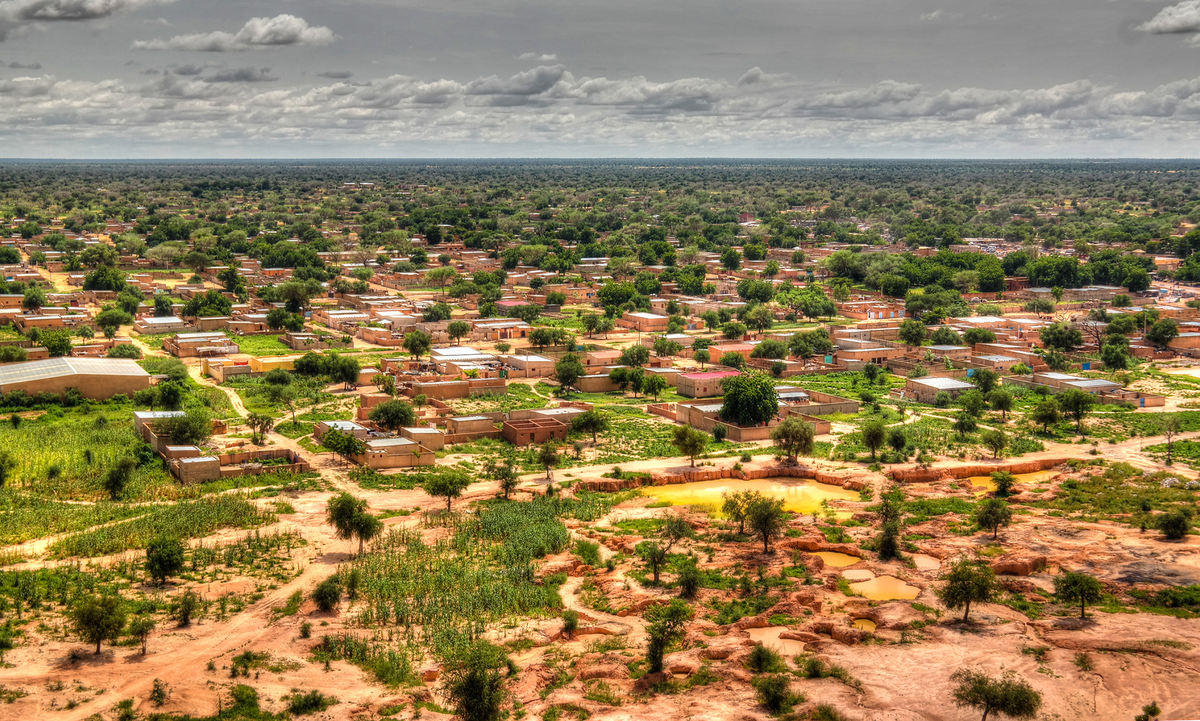
Warming has brought extreme rain to the parched Sahel, which is seeing aquifers refill as monsoons grow stronger. But heavier downpours alone cannot explain the groundwater revival, say hydrologists, who believe efforts to harvest rainfall may also be paying dividends.
When you purchase through links on our site, we may earn an affiliate commission. Here’s how it works.
This article was originally published by Yale Environment 360.
Near-extinct oryx are returning. Farms are prospering as irrigation water reaches fields for the first time in decades. Farmers are even nurturing new trees on their land. Once a byword for drought and famine, the African Sahel region on the southern flank of the Sahara Desert now has more water than it has for decades. Wells are filling as water tables have risen by 13 feet or more in places. Lake Chad, which was one of Africa's largest expanses of water before shriveling during the droughts, is recovering.
Over years of drought in the late 20th century, the sun hard baked the soils of the Sahel. Now, erratic but extreme rains are returning to this semi-arid region, causing lethal floods but also replenishing rivers, filling desert depressions, restoring water to dried riverbeds known as wadis, and sluicing rainwater off impermeable soils directly into aquifers. The process began in the 1990s but has accelerated in the past five years.
"Across the Sahel, from Ethiopia to Senegal, we have evidence of increased terrestrial water storage," says Richard Taylor, a hydrogeologist at University College London who has led ground teams investigating the relationships between climate, land use, and groundwater recharge in the region.
But increased rainfall since the drought years of the 1970s and 1980s explains only some of the rewetting of the Sahel. It cannot fully account for the transformation, say researchers. Also driving the rewetting, they posit, are changes to the land surface, ranging from the internationally funded Great Green Wall project to the revival of traditional water harvesting methods and the chaos caused by jihadist militants, which has led to the abandonment of irrigation projects that once emptied rivers of their flows.
Much remains unclear in these remote lands on the edge of the Sahara Desert, but the trend seems set to be long-term, with climate scientists saying more — and more extreme — rainfall is on the way in the 21st century. As underground water reserves revive, some are forecasting an agricultural renaissance.
The Sahel is a band of semi-arid land around 500 miles wide that stretches across North Africa, from Senegal in the west to Ethiopia in the east, with a fast-growing population above 150 million. It is a transition zone between the Sahara Desert in the north and savanna grasslands and coastal forests to the south. Water is everything in the Sahel. Its rains are critical to human survival, but they have been sporadic and unpredictable since the close of a humid era around 5,000 years ago.
Get the world’s most fascinating discoveries delivered straight to your inbox.
Shallow groundwater storage in February 2003 and February 2025, as compared to the average from 1948 to 2012.
How much rain the Sahel gets depends on the West African monsoon, a wet wind that sweeps north from the Gulf of Guinea between June and September, and on how far the monsoon penetrates into the interior. Whether it reaches the 15th parallel north of the equator or stalls at the 10th parallel make the difference between a good year and a failed harvest, say hydrologists.
During the droughts of the late 20th century, as the monsoon repeatedly fell short, up to a million people died of hunger and disease. But now, with a strengthening monsoon, there is talk among scientists of the Sahel being on the verge of a new humid era.
That is good news for wildlife. With wadi systems reviving in Chad's Ouadi Rimé-Ouadi Achim nature reserve, conservationists are documenting resurgent numbers of aardvarks, porcupines, badgers, and foxes, and the successful reintroduction of the scimitar-horned oryx, which was once declared extinct in the wild but now numbers more than 600 individuals. Elsewhere, West African giraffes are browsing on verdant vegetation in areas from which they had disappeared.
As the rains return, farmers have boosted crop yields by nurturing the natural regrowth of some 200 million trees on formerly treeless fields in southern Niger, according to former World Resources Institute geographer Chris Reij. And, supported by new aid programs such as the World Bank's regional recovery program PROLAC, they are re-establishing small-scale irrigation systems by tapping groundwater around resurgent oases in Chad, Niger, and Cameroon.