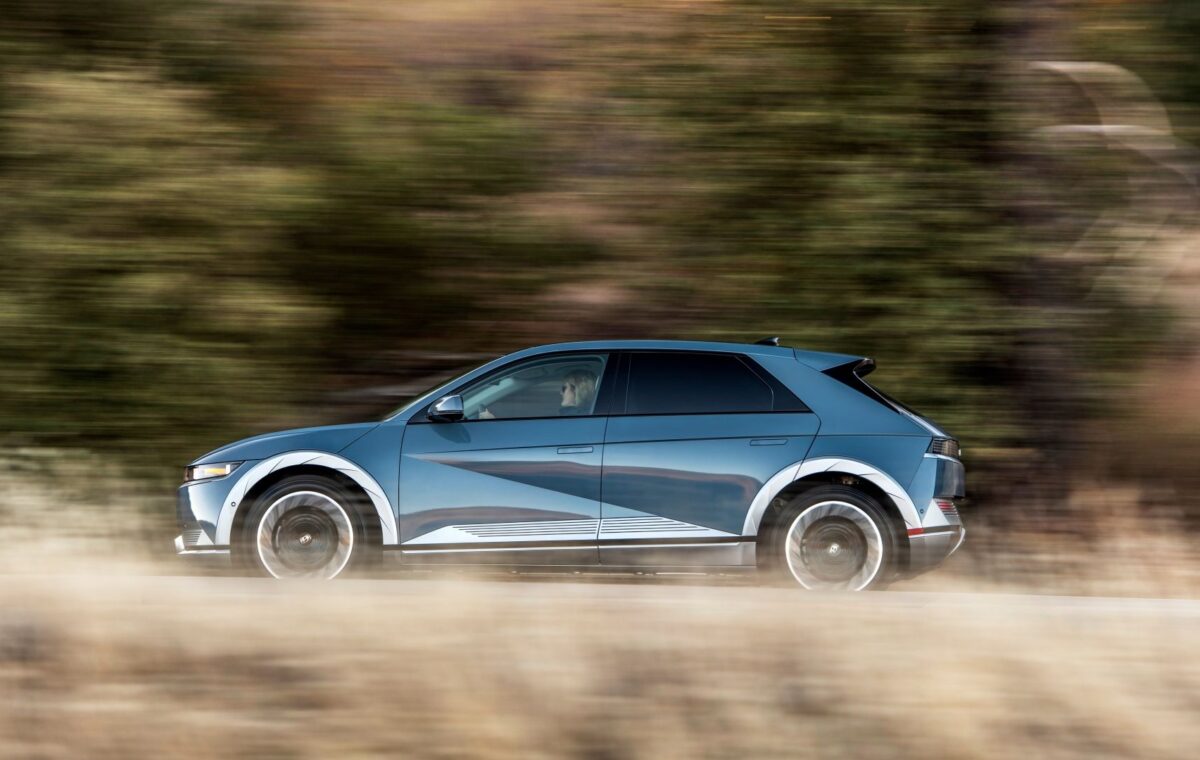
With the price of new cars constantly rising, it is becoming harder and harder to find spacious family crossovers without overspending. If you're willing to get something with a few miles on the clock, your options open up quite a lot. On top of this, with depreciation on EVs being very steep in the first couple of years, your budget can go even further if you're willing to make the swap over to an electric crossover.
One of our favorite modern EVs demonstrates this perfectly. Despite coming in what we think is a fantastic package, you can get this spacious crossover for less than the price of a brand new Toyota Corolla. It delivers usable range, quite a lot of power, fast charging times, and interior tech that is fit for a luxury car, all without breaking the bank.
In order to give you the most up-to-date and accurate information possible, the data used to compile this article was sourced from Hyundai websites and other authoritative sources, including the EPA.
New tech, cheaper cars, and changing rules will work in their favor.
While EVs do a lot of things really well, they tend to depreciate a lot quicker than traditional gas-powered cars or hybrids. This might not be great for the first owner, but it means that there are some fantastic deals to be had if you're willing to get something slightly used. The 2022 Hyundai Ioniq 5 is a great example. Despite being only four years old, this spacious electric SUV can now be had for less than the price of a new Corolla.
When brand new, a 2022 Hyundai Ioniq 5 would have cost you between $41,245 and $56,295 depending on which trim you opted for. It is worth noting that a lot of buyers likely took advantage of the federal tax incentive that was active at the time, giving them a tax credit of $7,500. Even taking that into account, though, 2022 models have depreciated quite a lot, which means that used buyers are getting a lot of value for money here.
Even new and at full price, we think that the Ioniq 5 offers pretty fantastic value. It is loaded with modern technology, puts down plenty of power, and feels impressively plush. The base model, the SE Standard Range, comes with a small battery pack and wasn't particularly popular, which is why we've excluded it from the table above.
We think that the SEL is the model to get. It comes equipped with a decently sized battery pack and tons of interior luxuries for the money that you pay. You get things like artificial leather upholstery, a wireless smartphone charging pad, a heated steering wheel, ambient interior lighting, and a hands-free liftgate. Choosing between the single-motor, rear-wheel drive setup and the dual-motor, all-wheel drive setup comes down to what you prioritize most, range or performance.
The Hyundai Ioniq 9 Calligraphy delivers flagship comfort, premium tech, and luxury refinement without the premium badge.
One of the biggest criticisms that people lay against EVs is that they lack character and are generally a bit dull to drive, regardless of how quickly they accelerate. This is one of the reasons that we love the Ioniq 5, with Hyundai creating something that genuinely feels fun. If you're more concerned with comfort than driving verve, the Korean EV still pulls through, with a plush ride quality and quiet cabin.
SE Standard Range models come with a pretty humble 168-horsepower, single-motor setup. This and its small battery are reason enough to skip this model. Every other model in the lineup comes standard with a 225-horsepower motor instead, powering the rear wheels. While not insanely quick, it offers more than enough grunt to feel fun. Those who are after something a little faster will want to opt for the dual-motor setup, which puts down quite a lot more power.
Hyundai has managed some pretty great driving dynamics here, especially when you consider the Ioniq 5 weighs well over 4,000 pounds with the larger battery pack. Its low center of gravity means that it feels pretty nimble in the corners. It still prioritizes comfort, though, with a soft suspension setup that is capable of absorbing any bumps or bangs with ease.
The base model Ioniq 5 comes equipped with a 58-kWh battery pack, with the EPA rating it for 220 miles of range. Every other model comes standard with a much larger 77.4-kWh battery. We'd skip any models with the smaller battery and make sure to get the larger pack. We would also make sure to check the battery health before you buy a used model to ensure that you're getting as much range as possible.
As we mentioned before, choosing between the single-motor and dual-motor models really comes down to your priorities. While the dual-motor model offers some serious performance, it is only rated for up to 256 miles on a single charge. Either way, though, the Ioniq 5 charges quickly, with Hyundai claiming that it'll only take 18 minutes on a DC fast charger to go from 10 to 80 percent charge.
I saw XPENG’s new AI car in Munich, and it convinced me the future of driving is arriving faster than most people think.