"Uncontacted" and "isolated" peoples live in roughly 10 countries around the world, including one group that erases their footprints so they cannot easily be found.
When you purchase through links on our site, we may earn an affiliate commission. Here’s how it works.
Although it might be difficult to believe in our hyper-connected lives, there are thousands of people across the planet who remain almost completely disconnected from the rest of the world.
It's estimated that there are at least 196 "uncontacted" Indigenous groups worldwide, living mainly in 10 countries in South America, Asia and the Pacific, including Brazil, Indonesia and India. They live in diverse environments, from islands, to deserts, and the forest-dense borderlands of the Amazon basin. These groups have had varying levels of contact with the outside world; while some have only sporadic encounters with neighboring Indigenous peoples, others more regularly encounter outsiders, sometimes against their will due to the presence of oil, logging, agriculture and mining industries that increasingly encroach on their lands.
But who among them are the most isolated people on Earth?
While this question is difficult to answer, there are some candidates for the "least contacted" groups, experts told Live Science.
There aren't strict definitions of what makes a group "uncontacted." The United Nations even notes that the description of such groups can vary from "free, uncontacted, hidden or invisible peoples, peoples in voluntary isolation, etc." Hal Russell, Asia and Pacific research and advocacy officer with the nongovernmental organization, Survival International, said, "We define 'uncontacted peoples' as Indigenous peoples who generally avoid contact with outsiders and have no permanent relationship with them, even while being aware of the outside world."
"Certainly there is a spectrum between permanent contact, initial contact, sporadic contact and none at all," he told Live Science.
Generally what unites these groups is that they have actively avoided or tried to limit contact with other cultures, even with other uncontacted peoples, to maintain their unique way of life.
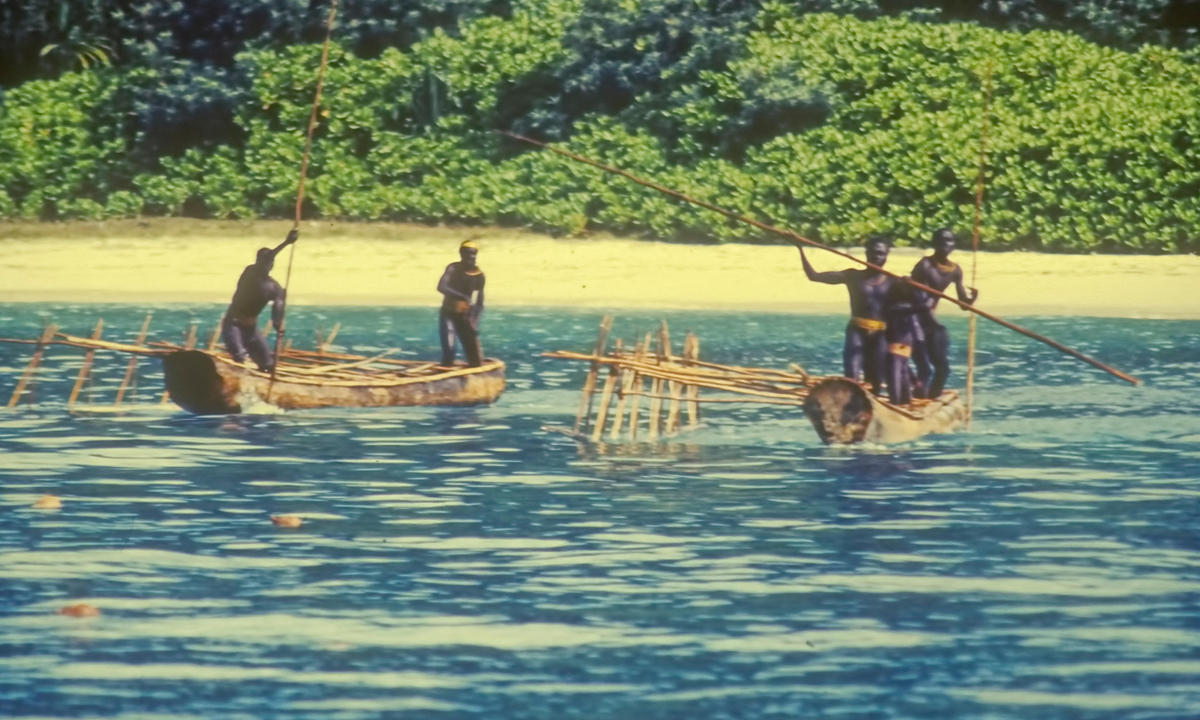
One such candidate is a small group of Indigenous islanders known as the Sentinelese, who live on North Sentinel Island within India's Andaman and Nicobar Islands in the Bay of Bengal. This group is so little known that anthropologists aren't even sure what they call themselves; their name is based on the roughly 23-square-mile (60 square kilometers) island where they live.
According to Survival International, it's believed that the Sentinelese have lived in the Andaman Islands for up to 55,000 years and are direct descendants of the first humans to migrate out of Africa. Today, the Sentinelese follow a hunter-gatherer lifestyle and fish along the coastline, using sleek, hand-carved canoes. Survival International estimates that the group includes between 50 and 150 people, although lack of access to the group makes them near impossible to count, and the government has not attempted to include them in the Indian census. Their official numbers remain unknown.
Sign up for our weekly Life's Little Mysteries newsletter to get the latest mysteries before they appear online.
Aside from the island's remoteness, contact is even more difficult because the islanders reject it. The community has been known to shoot at approaching boats and hovering helicopters.
"When they shoot bows and arrows, they are communicating," Simron Singh, a professor at the University of Waterloo in Ontario whose expertise is in island environments and the peoples of the Andaman and Nicobar islands, told Live Science. "It says they do not want to be disturbed."
Only a handful of outsiders have ever set foot on North Sentinel Island, and Indian law now prohibits travel within a 3-mile-radius (5 km) of the island for the protection of both parties. Islanders are vulnerable to diseases brought by outsiders, and visitors are at risk of attack; the Sentinelese have shot and killed at least three people, including a missionary named John Allen Chau, who traveled to the island illegally in 2018.