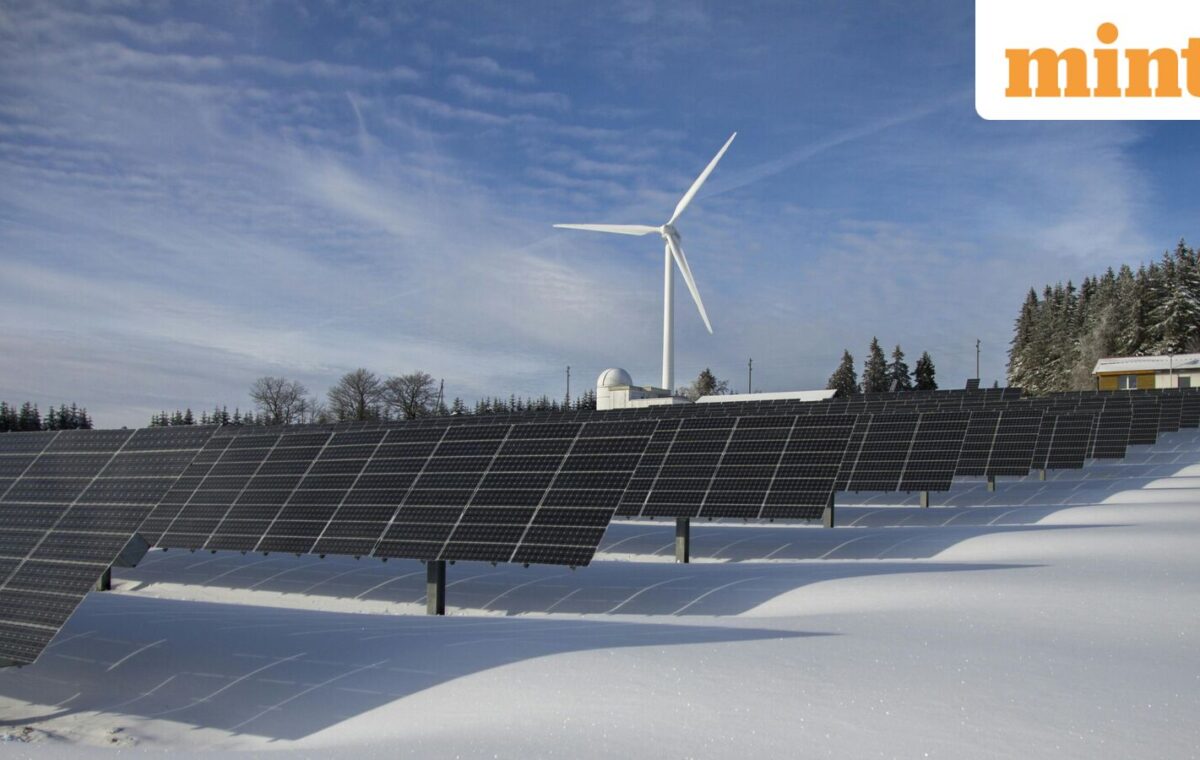
India’s non-fossil power capacity has crossed 300 GW, marking a new phase in the country’s energy transition: from rapidly adding renewable capacity to building the transmission, storage and grid infrastructure needed to make that capacity dependable.
As of 31 July, India had 300.50 GW of installed non-fossil electricity capacity, comprising 164.59 GW of solar, 58.14 GW of wind, 57.24 GW of large and small hydropower, 11.75 GW of bio-power and 8.78 GW of nuclear power, the ministry of new and renewable energy said in a statement on Sunday.
India’s total installed power generation capacity stood at around 552GW as of July end, putting non-fossil sources at about 54% of the capacity mix.
Solar has been the main driver of the expansion. “The pace of expansion continues to accelerate. During 2025–26 alone, India added a record 55.29 GW of non-fossil electricity capacity, including 44.6 GW of solar and 6 GW of wind capacity, the highest annual addition of non-fossil capacity recorded in the country,” the statement said.
India had reached 50% of cumulative installed electricity capacity from non-fossil sources in June 2025, five years ahead of the timeline envisaged under its Nationally Determined Contribution to the Paris Agreement.
The next phase of the energy transition, however, is likely to be less about adding generation capacity and more about building a domestic clean-energy ecosystem and a power system capable of integrating increasingly large volumes of variable renewable energy reliably and economically.
India has expanded domestic manufacturing across the renewable-energy value chain. Capacity enlisted under the Approved List of Models and Manufacturers (ALMM) for solar photovoltaic modules has crossed 200 GW. Policy measures, including the production-linked incentive framework, are helping build manufacturing capabilities while strengthening supply-chain resilience.
But more renewable capacity also puts greater demands on the electricity system. Transmission infrastructure, energy storage, flexible generation, forecasting and advanced grid-management technologies will need to expand alongside generation.
That makes the green energy corridors more than transmission projects: they are foundational infrastructure for an electricity system increasingly built around intermittent renewable power.
The next generation of India’s power system is expected to combine solar and wind with battery energy storage systems, pumped storage and digital technologies to improve reliability and efficiency.
At the recently held Mint Sustainability Summit 2026, sector players said the challenge is becoming more acute as renewable capacity expands and tariffs remain lower than those of conventional power. The next phase of the energy transition, they said, will require rapid expansion of transmission infrastructure to integrate green power into the grid, alongside large-scale energy storage to ensure a stable and reliable electricity supply.
At a panel discussion at the summit, Deepak Thakur, managing director and chief executive of Hinduja Renewables, said, “India is clearly moving from building renewable energy assets to building a dependable energy system. The next phase is fundamental. It will not be measured in gigawatts (GW), it will now be measured in terms of….can we deliver when customers actually need it? That being said, the projects which we are conceiving cannot be standalone solar and wind anymore; we have to talk about integrated portfolios. This has to combine generation, storage, forecasting and transmission.”
Rituraj Baruah is a special correspondent covering energy, housing, urban affairs, heavy industries and small businesses at Mint. He has reported on diverse sectors over the last eight years including, commodities and stocks market, insolvency and real estate; with previous stints at Cogencis Information Services, Indo-Asian News Service (IANS) and Inc42.
Catch all the Industry News, Banking News and Updates on Live Mint. Download The Mint News App to get Daily Market Updates.
Log in to our website to save your bookmarks. It'll just take a moment.