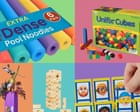
Five elementary school teachers spill the beans on how to keep kids engaged in creative play and away from screens
The best back-to-school sales and 21 things tweens want this season
Sign up for the Filter US newsletter, your weekly guide to buying fewer, better things
The Guardian’s journalism is independent. We will earn a commission if you buy something through an affiliate link. Learn more.
The “iPad kid” meme is popular for a reason: screens have become a near-permanent fixture in gen Alpha’s lives.
The Guardian’s journalism is independent. We will earn a commission if you buy something through an affiliate link. Learn more.
On average, kids five and older spend more than three hours a day on their devices. We know that too much screen time is linked to harmful health outcomes, but it is not easy to convince your child that reading a paperback novel is more exciting than playing Roblox or binge watching YouTube.
That doesn’t mean we should throw in the towel. “A lot of children who gravitate toward screens still crave creativity and imagination – they just need activities that feel immersive and engaging enough to compete with digital entertainment,” said Brandon Jenkins, a fourth-grade teacher based in Houston, Texas, in an email.
We interviewed five elementary school teachers across the country, who shared their tips and tricks. Here are six of their recommendations – including the classic board games their students love and creative ways to use sidewalk chalk.
This year, Adrian Neibauer’s students are partial to the games you probably grew up playing: Battleship, Sorry!, Jenga and Uno.
“I would recommend these specific games to parents because they are classic games that are quick to learn, easy to play and require strategy,” the Denver-based elementary school teacher said. “I use Battleship when teaching coordinate plane geometry and students immediately make the connection to the game.”
His students also enjoy Ticket to Ride, a board game where you draw cards and build routes with miniature trains (we recommend the simpler version First Journey, as best for young kids).
Jenkins, the fourth-grade teacher in Houston, also recommended “strategy-based board games” such as Guess Who?.
“I have learned how much joy students find in hands-on activities. My students especially love building with blocks, Unifix cubes and magnetic tiles,” said Chyna Delk-Bratcher, a kindergarten teacher and recipient of her former school’s 2024-2025 beginning teacher of the year award. Unifix cubes are Lego-like stackable pieces that students can use to learn counting, sorting and other basic math concepts. (Or simply build endless stacks of rainbow cubes to their hearts’ content.)
Noemi Hernandez, a first-grade dual language teacher and recipient of her county’s educator of the year award recommends Operation: it “helps with hand grip and control” and “with writing as they work on how to hold the tweezers”.