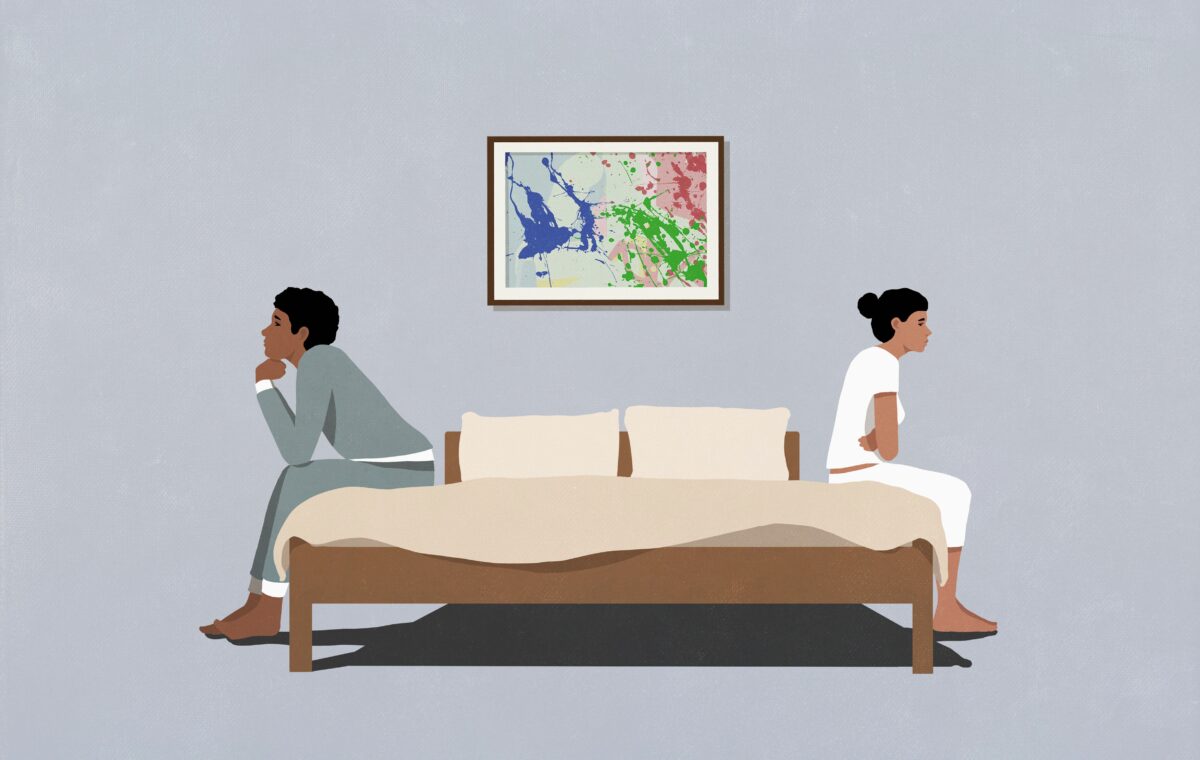
You send your partner a text. Hours pass without a reply.
Logically, you know they’re probably busy. But emotionally, your brain starts spinning. Are they upset with you? Did you do something wrong? Do they still love you?
Most people have moments like this from time to time. But for many people with attention-deficit/hyperactivity disorder (ADHD), those feelings can be much more intense, and may be tied to something often referred to as emotional permanence.
Emotional permanence is a non-clinical term used to describe the ability to hold on to the feeling that someone loves, values or cares about you even when they aren’t physically present or regularly communicating with you.
“Emotional permanence is not an officially recognised diagnostic symptom of ADHD, although many individuals with ADHD report experiencing symptoms that closely resemble it,” said therapist Stephanie Lewis.
“Many report a lack of ability to maintain the emotional reality of a relationship as long as the individual involved is not physically present or actively engaged in communication with them. The phenomenon is much more than simply forgetting another person exists; rather it involves loss of access to the feeling of being loved, valued and/or connected to another person during short periods of time.”
A delayed text, a missed call or a quiet day from a partner or friend can suddenly feel like evidence that the relationship has changed and can cause not only anxiety for the person with ADHD, but also possible friction within a relationship.
People who struggle with emotional permanence don’t necessarily doubt their relationships all the time. Rather, they may suddenly feel as though an emotional connection has disappeared simply because it hasn’t been recently reinforced.
For example, someone with ADHD may intellectually know their partner loves them, but after a day without hearing from them, begin wondering whether something is wrong.
“In my work with individuals with ADHD I have met patients who intellectually understand their partner’s love for them,” Lewis said. “Yet, upon going one full day without receiving a text message from their partner, they begin to wonder whether something is wrong and/or if they have caused their partner to become upset with them.”
“This emotional uncertainty will often result in anxiety, increased reassurance-seeking behavior or increased conflict within the relationship,” Lewis said.
The same pattern can show up outside romantic relationships. A delayed response from a friend can feel like rejection. A lack of feedback from a manager can feel like criticism. Even when nothing has objectively changed, the emotional certainty that someone cares can suddenly feel precarious.
Although emotional permanence is not part of the diagnostic criteria for ADHD, experts say several characteristics commonly associated with ADHD may help explain why many people with ADHD identify with this experience.
Lewis points to working memory challenges, difficulties with emotional regulation and rejection-sensitive dysphoria – an intense emotional response to perceived criticism or rejection that many, though not all, people with ADHD experience.
“A number of variables may also contribute to the existence of emotional permanence,” Lewis said. “For example, working memory deficits may limit the ability to retain emotional information, whereas difficulties with emotional regulation and rejection-sensitive dysphoria may increase the fear of rejection or disconnection.”
Source: Read the original article on www.huffingtonpost.co.uk