Engineering students rarely work in one place. They bounce between lectures, labs, and libraries. That means your laptop has to be lightweight, long-lasting, and ready for heavy workloads. The options below balance portability with the power needed for CAD and simulations.
Why you should trust PCWorld for laptop reviews and buying advice: It’s in our name! PCWorld prides itself on laptop experience and expertise. We’ve been covering PCs since 1983, and we now review more than 70 laptops every year. All of the picks below have been personally tested and vetted by our experts, who’ve applied not only performance benchmarks but rigorous usability standards. We’re also committed to reviewing PC laptops at every price point to help you find a machine that matches your budget.
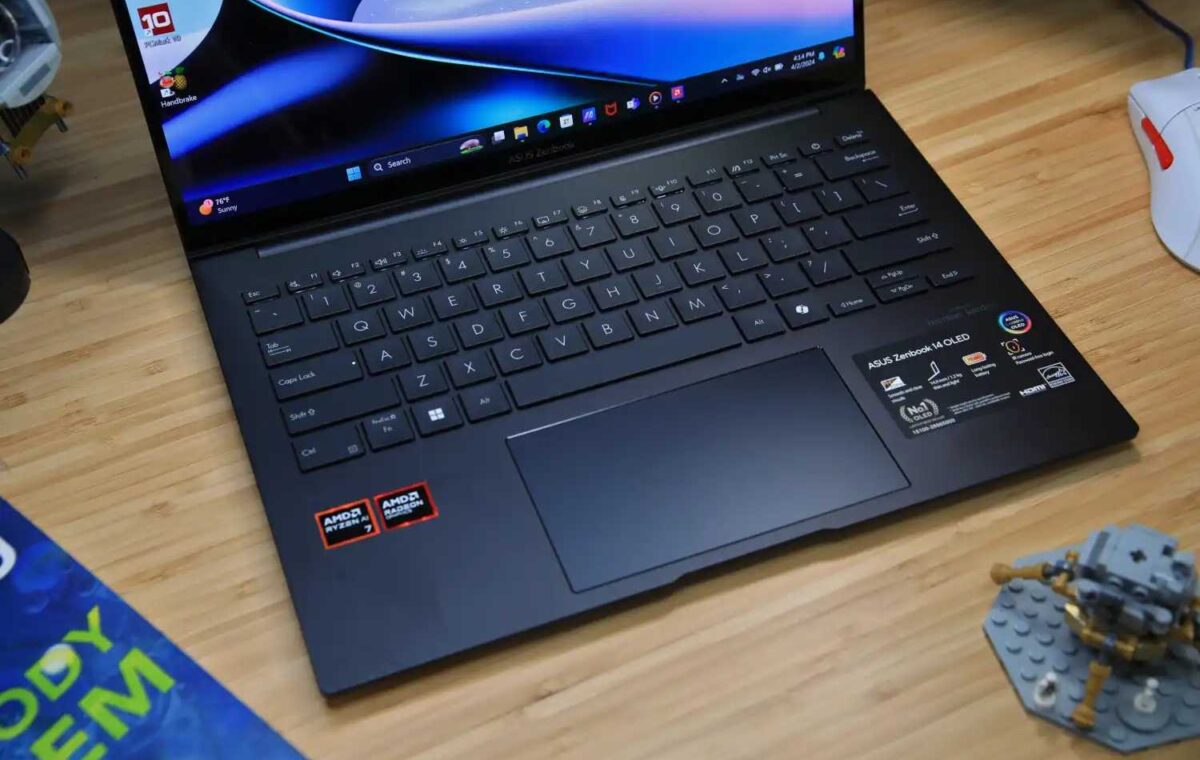
The Asus Zenbook 14 OLED tops our list because of the brilliant combination of power, portability, and battery life. The AMD Ryzen 7 chip is designed to run heavier programs like CAD without slowing down, even if you’ve got a bunch of tabs open on the side. The 14-inch 1920×1200 OLED touchscreen also looks fantastic and will make your diagrams and other projects really pop.
The one thing that really sticks out is the battery, though. Seriously, it went for over 16 hours in our test, which kind of blew my mind. You can definitely survive a whole day of classes, especially with conservative use and the brightness turned down. The audio is also quite good, offering you good volume and clarity during remote lectures.
The build quality’s pretty good, especially considering it’s just $699 as of this writing. It’s also thin (0.59 inches) and light (2.82 pounds), which is great if you’re running from class to class. While the keyboard isn’t the best we’ve ever used because of the undersized keys, it’s totally fine for day-to-day use.
Read our full
Asus Zenbook 14 OLED review
The Dell 14S is a great fit for engineering students who want a laptop that can easily last through a long day of classes. It actually delivered some of the longest runtimes we’ve seen (nearly 36 hours in our video playback test!), thanks in part to its efficient Intel Core Ultra 7 355 processor and 69 watt-hour battery.
It’s also just a solid day-to-day machine. The aluminum design feels nice and sturdy, the keyboard is comfortable to type on for long periods of time, and the laptop remains easy to carry at just 3.28 pounds. For students who mainly use office apps, the Dell 14S has more than enough power for that kind of thing.
This isn’t the laptop to buy if you need raw performance. The Dell 14S relies on Intel integrated graphics rather than a dedicated GPU, so it’s not the best choice for running demanding CAD projects.
Ultimately, the Dell 14S is a portable, reliable machine for students who spend most of their day away from a desk. It puts efficiency first.
Read our full
Dell 14S review
If you’re an engineering student who likes to game after class, the Acer Nitro V 16 AI is worth considering. The RTX 5050 tucked inside delivers smooth 1080p gaming, hitting a respectable 72 FPS in Cyberpunk 2077 on Ultra settings. It also gives extra firepower for CAD modeling and rendering tasks. The 16-inch 1920×1200 IPS display is slightly taller than the typical 15.6-inch 1080p screens, so you’re getting more vertical workspace here–this is useful for coding, spreadsheets, and so on. At a price hovering between $800 and $900 it’s a budget-friendly option for students.
The AMD Ryzen 5 240 isn’t the fastest CPU around, and the speakers aren’t impressive, but despite these trade-offs, the Acer Nitro V 16 AI avoids common pitfalls most budget gaming laptops fall into. It lasted 12 hours on a single charge in testing, which is impressive for a gaming machine. The keyboard and touchpad are also spacious, making it comfortable to work on for long periods.
Read our full
Acer Nitro V 16 AI review
If you’re an engineering student with a jam-packed schedule, often needing to run from class to class, the Surface Pro is so lightweight (just a little over a pound) you’ll hardly notice its presence. Inside this laptop you’ll find a Snapdragon X Plus chip, so you can expect it to deliver a quiet, fanless experience (perfect for working in libraries and lecture halls), and it should handle basic coding and homework just fine.