Account subscription benefits alongside Premium Stories, Editorials,
Opinions and more. Unlock these with Subscription
The View From India
Looking at World Affairs from the Indian perspective.
First Day First Show
News and reviews from the world of cinema and streaming.
Today's Cache
Your download of the top 5 technology stories of the day.
Science For All
The weekly newsletter from science writers takes the jargon out of science and puts the fun in!
Data Point
Decoding the headlines with facts, figures, and numbers
THEdge
At the cutting edge of education and careers
Health Matters
Ramya Kannan writes to you on getting to good health, and staying there
Gender Agenda
Stories from beyond the binary.
The Hindu On Books
Books of the week, reviews, excerpts, new titles and features.
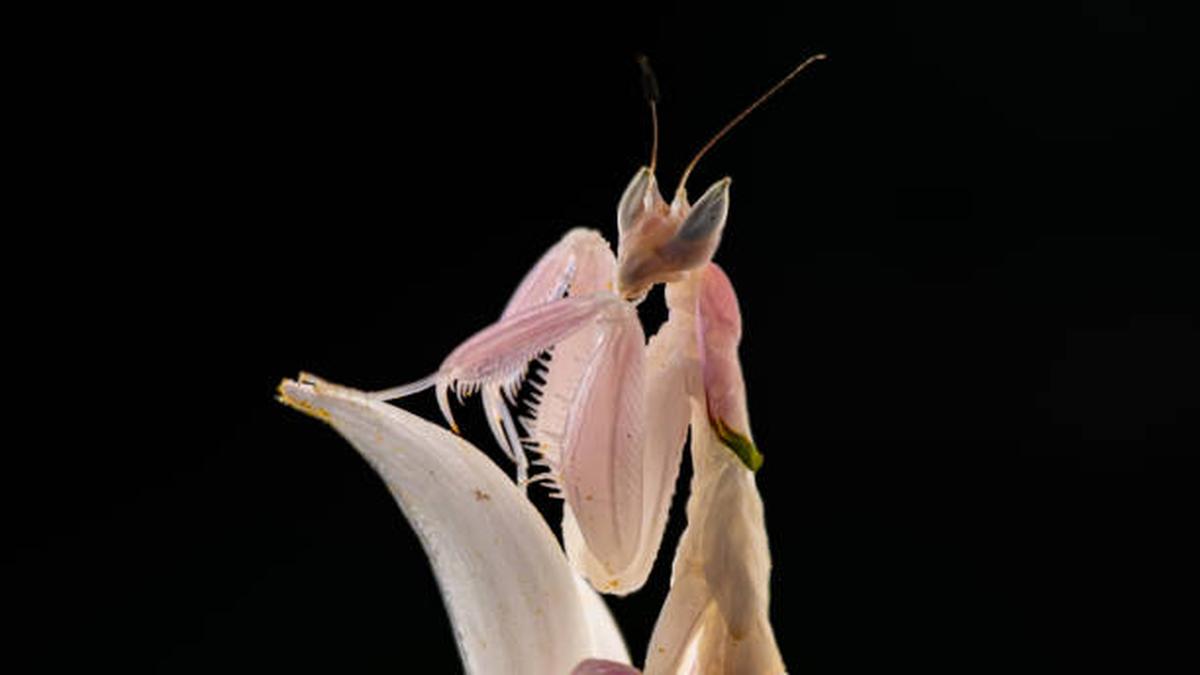
The insect world is indeed replete with examples of mimicry: they can be indistinguishable from tree barks to twigs and moss to lichen to protect themselves or attract prey. Here, an orchid mantis perched on a flower. Picture for representation.
| Photo Credit: Nanda Hari Susilo
When a certain brilliantly-coloured butterfly, found halfway around the globe—from India to Japan—closes its wings, you cannot tell it apart from a dead leaf: the ‘dead leaf’ butterfly’s wings turn a deeply-veined brown or yellow, ending in a point. And so, when a bird pursues it aerially, the butterfly closes its wings and drops down motionless on to the forest floor, disappearing into the undergrowth and confounding its predator. This butterfly exhibits masterful mimicry to escape predators, as do many insects around the world.
In Southeast Asia, for instance, the pink-hued, green-eyed ‘orchid mantis’ (in the picture), with legs that mimic flower petals, is cleverer still: it uses its camouflage to both avoid predators and attract pollinating insects by absorbing UV light as flowers do: it even sways like a flower in the wind.
The insect world is indeed replete with examples of mimicry: they can be indistinguishable from tree barks to twigs and moss to lichen to protect themselves or attract prey. In May this year, scientists reported an extraordinary rainforest insect that glowed a hot pink in Panama, transforming into green in under two weeks, “perfectly mirroring the life cycle of tropical leaves that emerge pink before maturing,” said their paper.
The specific mimicry of flowering plants was once thought to date back to 47 million years ago from fossil records. But now, a new paper in Insect Science records evidence of flowering-plant mimicry farther back to 99 million years ago, when plants were just beginning to morph Earth’s ecological landscape.