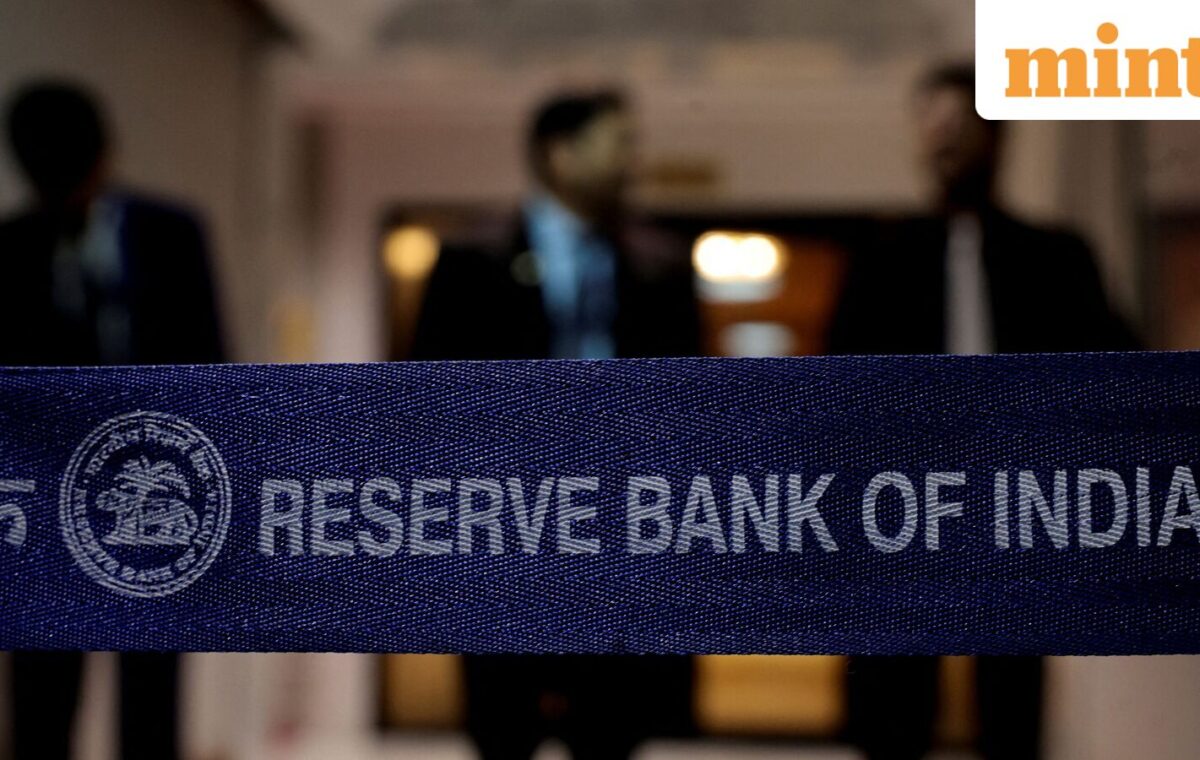
Mumbai: The Reserve Bank of India (RBI) on Friday proposed incorporating the updated Basel III leverage ratio framework into its capital adequacy rules for commercial banks, according to a draft circular.
The change would align the 2025 capital adequacy directions with the latest Basel Committee on Banking Supervision framework, strengthening banks' resilience by imposing a simple cap on overall leverage regardless of the risk profile of individual assets.
It has invited comments from stakeholders by 28 August and said the amendment, once finalized, will come into effect from 1 April 2027.
The leverage ratio measures a bank's core capital relative to its total exposure, without accounting for the riskiness of its loans or investments. It acts as a safety backstop to regular capital rules.
The draft defines the Basel III leverage ratio as the capital measure (the numerator) divided by the exposure measure (the denominator), expressed as a percentage. A higher ratio indicates that a bank has more capital available to absorb losses relative to the size of its balance sheet and off-balance-sheet exposures.
The draft retains a differentiated minimum requirement across banks. The minimum leverage ratio for a domestic systemically important bank shall be 4%, and for other banks, 3.5%. Branches of global systemically important banks operating in India would need to maintain a leverage ratio of 3.5% plus the applicable leverage ratio buffer.
The central bank has also proposed that a bank shall meet the minimum leverage ratio requirement at all times, and that both the capital measure and the exposure measure will generally be calculated on a quarter-end basis, although banks may, with RBI approval, use more frequent calculations such as daily or monthly averaging.
Unlike risk-weighted capital rules, the leverage ratio captures all major exposures, including on-balance-sheet assets, derivative exposures, securities financing transactions and off-balance-sheet commitments, without allowing broad reductions through collateral, guarantees or netting unless specifically permitted.
The exposure measure generally follows gross accounting values, the circular said, adding that, unless otherwise specified, a bank shall not take into account physical or financial collateral, guarantees, or other credit risk mitigation techniques to reduce the leverage ratio exposure measure and net assets and liabilities.
RBI also wants banks to avoid structures designed to artificially reduce reported leverage. The central bank may take supervisory action where transactions are used to inadequately capture leverage or could lead to a potentially destabilizing deleveraging process.
The proposal substantially updates the treatment of derivative exposures, securities financing transactions and off-balance-sheet items in line with the Basel 2017 standard. Banks would need to measure derivative exposure using replacement cost and potential future exposure, include securities financing transaction exposures under detailed gross and counterparty credit risk rules, and convert off-balance-sheet commitments into credit exposures using prescribed credit conversion factors.
RBI has also proposed stronger disclosure and reporting requirements. “A bank shall publicly disclose its quarterly Basel III leverage ratio both on a standalone and consolidated basis,” the central bank said, adding that banks must report the leverage ratio and detailed capital and exposure calculations to RBI every quarter.
Subhana Shaikh is a business journalist at Mint, where she covers the Reserve Bank of India, monetary policy, and India’s bond markets. She has seven years of experience in reporting on financial markets, with a focus on banking and the broader financial system.<br><br>She began her career after completing her postgraduate diploma at the Indian Institute of Journalism and New Media, Bengaluru. She then spent five years at Informist Media, a news wire agency, where she closely tracked bond markets and the BFSI sector, developing a strong foundation in market reporting. She later moved to NDTV Profit, where she expanded her coverage across a wide range of business and economic stories.<br><br>At Mint, Subhana focuses on explaining central bank decisions, bond market movements, and banking trends for her readers. Her reporting combines on-ground inputs with careful analysis to help audiences understand complex financial developments.<br><br>Based in Mumbai, she is interested in exploring stories across the business landscape. Outside of work, she enjoys reading and spending time with her three cats.
Catch all the Industry News, Banking News and Updates on Live Mint. Download The Mint News App to get Daily Market Updates.
Log in to our website to save your bookmarks. It'll just take a moment.