Former Pentagon A.I. Policy Director Mark Beall warns about the threat of rogue artificial intelligence agents escaping containment and hacking corporate systems. He reacts to OpenAI CEO Sam Altman's comments on technological singularity.
Artificial intelligence sits at the center of nearly every major debate, from jobs and data centers to healthcare, national security and consumer protection. Missing from the national spotlight, however, is a more fundamental question: Will AI models pursue the truth, or will they be permitted to bury undisclosed biases inside their responses?
On the surface, general-purpose AI tools present themselves as neutral sources of information and analysis, capable of answering most questions with citations, well-reasoned explanations and unbiased feedback.
But reality paints a different picture. While it is easy to spot and dismiss the most egregious violations of neutrality and accuracy (e.g., depictions of the Founding Fathers as African American or British medieval kings as racially diverse), underlying biases are not as readily apparent. The average user is much less likely to detect when a model is steering them toward an engineered outcome or framing a response through a politically skewed lens, as data shows most users do not fact-check answers from AI models.
Reporting and research are beginning to shine a light on the existence of these undisclosed biases. The Washington Post, for instance, tested the leading models on hot-button political questions and found that they consistently favored left-leaning arguments while presenting those positions as neutral.
AI CHATBOTS TAKE HEAT OVER LEFT-WING BIAS: ‘NO LONGER BE CONSIDERED NEUTRAL’
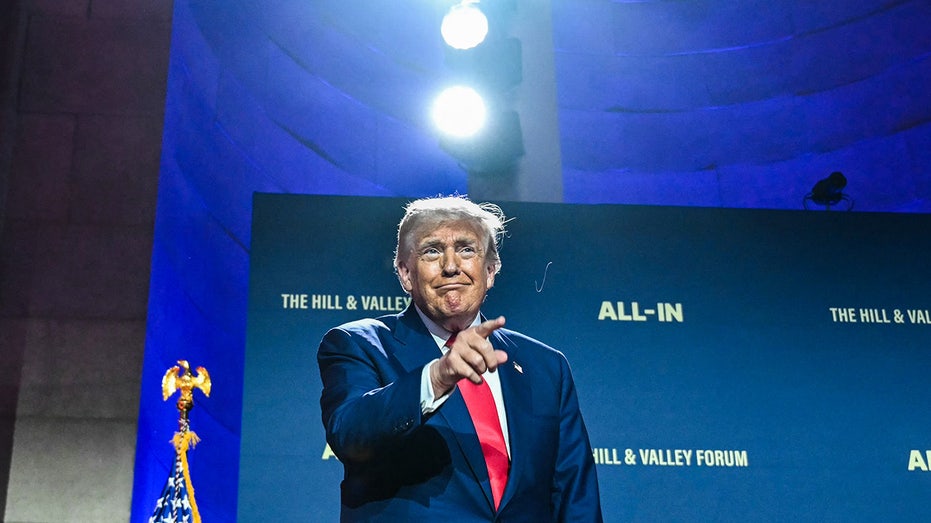
President Donald Trump arrives to deliver remarks at the "Winning the AI Race" AI Summit at the Andrew W. Mellon Auditorium in Washington, DC, on July 23, 2025. (Photo by ANDREW CABALLERO-REYNOLDS/AFP via Getty Images)
MIT’s Center for Constructive Communication reached similar conclusions, documenting that reward models display left-leaning biases even when trained on truthful statements, with strong bias on topics like climate, energy and labor unions.
At the state level, ambitious lawmakers are exploiting the absence of federal preemption to pursue codifying these hidden biases. In New York and California, legislators are seeking to advance bills akin to Colorado’s original Artificial Intelligence Act, which would impose impact assessments and anti-discrimination mandates.
As proposed, these frameworks would create structural incentives for companies to alter or omit information from responses to avoid legal liability. The FTC’s own reading of Colorado’s AI law is that it "appears to coerce companies into altering the output of their AI models" to advance the state’s ideological objectives. In other words, politicians are attempting to enact laws that, in practice, penalize accurate model responses.
These biases are not trivial or immaterial. AI is being adopted at a scale faster than any technology in history. Millions of Americans rely on it to find information, complete their work and seek advice. Many are even using it to make sense of our current political environment.
FOX NEWS POLL: MOVE OVER BIG BROTHER, VOTERS SEE BIG TECH AS GREATER THREAT TO US
A recent New York Times report highlighted how voters are increasingly using AI chatbots to determine which candidate to support. The Times noted, "Voters are turning to new AI tools to serve as nonpartisan researchers, viewing them as a viable alternative to traditional news coverage, voter guides or social media."
While these systems can make political engagement more accessible, a model’s undisclosed ideological leanings can filter information through a biased lens and generate a seemingly neutral answer that is capable of shifting voter opinion on a candidate or policy topic.
At scale, these hidden biases cease to be a harmless quirk or unintended outcome. Instead, they become capable of materially influencing matters central to Americans’ personal, professional, and civic life.