The results have inspired equal parts hope and terror about the future of AI-inflected biology
I would like to be emailed about offers, events and updates from The Independent. Read our Privacy notice
Researchers have used artificial intelligence to identify and create functioning viruses not seen in nature for the first time.
The research, announced in the journal Science on Thursday, “expands what synthetic genomics can achieve,” according to its authors from Stanford University and the California-based Arc Institute.
Stanford chemical engineer Dr. Brian Hie said his team’s work could help inform future medicines aimed at treating drug-resistant bacteria using bacteriophages, viruses that infect and kill bacteria.
“If the bacteria gain resistance to a single phage, it’s game over for the medication,” Hie told the Stanford website on Thursday. “But if you have multiple genetically distinct phages in a mixture, it would be harder for the bacteria to develop resistance to the entire cocktail.”
Others were alarmed that governments are not equipped to handle these rapidly advancing technologies, which could fall into the hands of bad actors.
“Although this is promising for life sciences applications, it also raises urgent biosafety and biosecurity questions,” experts from the Center for Health Security at Johns Hopkins University wrote in a commentary accompanying the research in Science. “The ability to compose viral genomes using generative AI now exists; the governance to safely steer it does not.”
To build their novel virus, the researchers trained an open-source AI model known as Evo on the genetic sequences of millions of animals, plants, microbes and viruses, excluding data from viruses that infect humans.
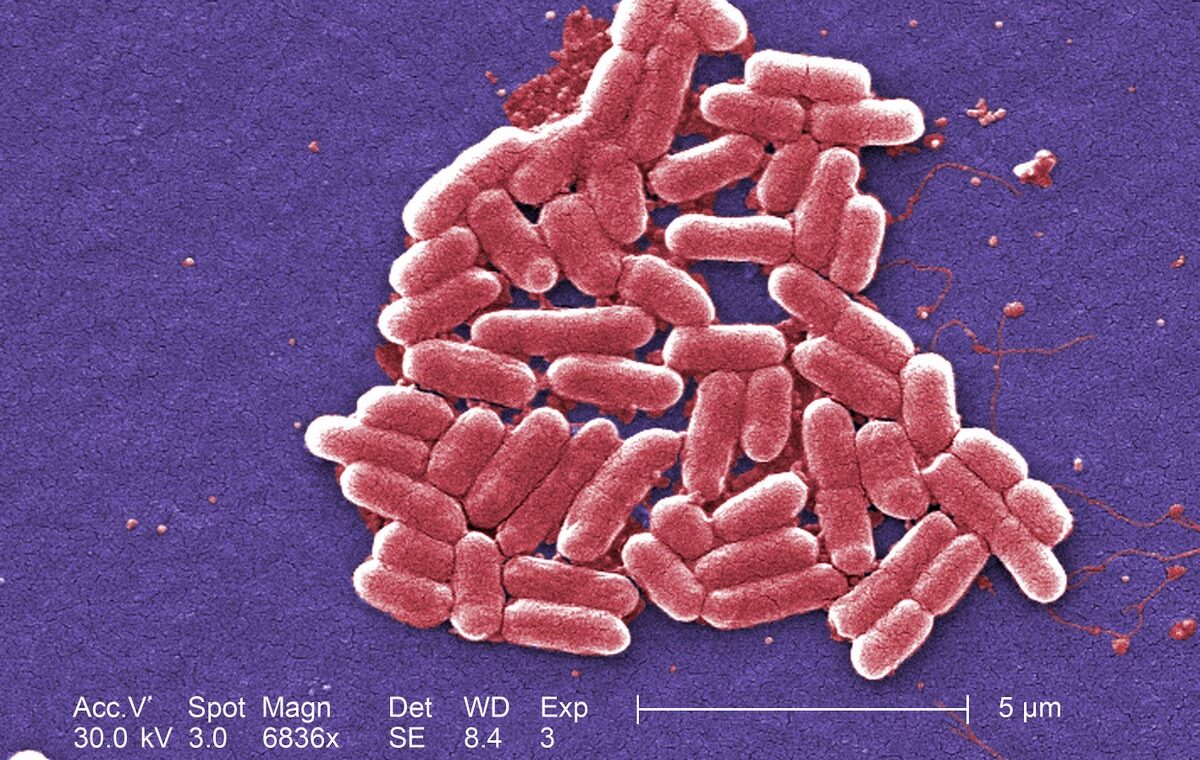
They then homed in on the virus ΦX174, a well-studied bacteriophage that infects only E. coli, training the AI on its genome and those of similar viruses.
Using this information, the model generated 700,000 potential new viruses, 285 of which the researchers converted into DNA molecules. Sixteen produced viable viruses when inserted into bacteria.
The newly created viruses showed promise in overcoming resistance from their hosts, suggesting similar methods could be used to develop medication targeting tuberculosis and methicillin-resistant Staphylococcus aureus, according to the researchers.
“We have a proof of concept in the paper, where we show that this cocktail of 16 phages rapidly overcomes resistance in E. coli that is immune to native ΦX174,” Hie told the Stanford website.
AI systems, with their ability to detect patterns in large datasets, have proven adept at studying lengthy sequences of DNA and proteins.
In 2024, researchers at Google DeepMind won a Nobel Prize for AlphaFold, which predicts the complex three-dimensional structure of proteins.