New CEO Dave Lewis lifts investors’ spirits by promising strategic overhaul worthy of his nickname ‘Drastic Dave’
Diageo’s new chief executive has unveiled plans to nearly double Guinness production while hacking back a “significant” proportion of its 30,000-strong workforce, in a strategic overhaul worthy of his nickname, “Drastic” Dave Lewis.
Shares in Diageo bounced on Thursday, as the former Tesco boss faced down the first big test of his initial half-year in the job, after being parachuted in last November to revive the flagging fortunes of the UK-based drinks company.
Speaking after the company announced a decline in sales but slightly better-than-expected operating profit, Lewis said his turnaround plan would involve job cuts, adding that the “consequences of that are not great for anybody”.
But he added: “Nobody [inside the company] is saying to me that this is the wrong thing to do.”
Lewis declined to give a figure for the expected reduction in the worldwide headcount.
However, Diageo has told investors that it expects to incur $514m (£382m) in charges relating to employee severance and Lewis said he had discovered “massive” duplication in roles since becoming CEO.
Lewis, who earned the “Drastic Dave” moniker in the City for his cost-cutting zeal, promised to deliver $1bn of annual savings over two years through a restructuring that would cost $1.2bn and was aimed at making the company more agile.
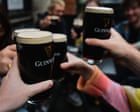
While this will involve slashing jobs, Lewis vowed to harness the seemingly unstoppable popularity of Guinness around the world.
A $1bn investment in the brand is aimed at increasing global sales, particularly in North America, and helping the company avoid a repeat of shortages reported in the UK in recent years, including during the important festive period.
“We’re going to double the capacity of Guinness during the course of this plan [by 2031],” said Lewis, adding that the future of the brand was “very bright”.
Production capacity is slated to increase from 8.2m hectolitres (mHL) today to 15.7m by 2031, an increase equivalent to 300 Olympic-sized swimming pools of the black stuff a year.
In the months after his appointment, some City pundits speculated that he might take the radical step of selling Guinness to raise up to £8bn. The company moved quickly to quash any suggestion of selling its best-performing big brand.
Diageo was not actively seeking to sell less well-performing brands, Lewis said.
In the past decade, the company has focused on “premiumisation”, banking on discerning drinkers choosing upmarket brands. That strategy has left Diageo with an overloaded stable of more expensive labels, just as cash-strapped consumers stopped drinking from the top shelf.