You have reached your maximum number of saved items.
In this week’s On Background, a similar story at the ABC’s embattled Four Corners, News24’s impartial-free-zone, News Corp unplugs its phone line and a tech journalist is caught out using his same old tricks.
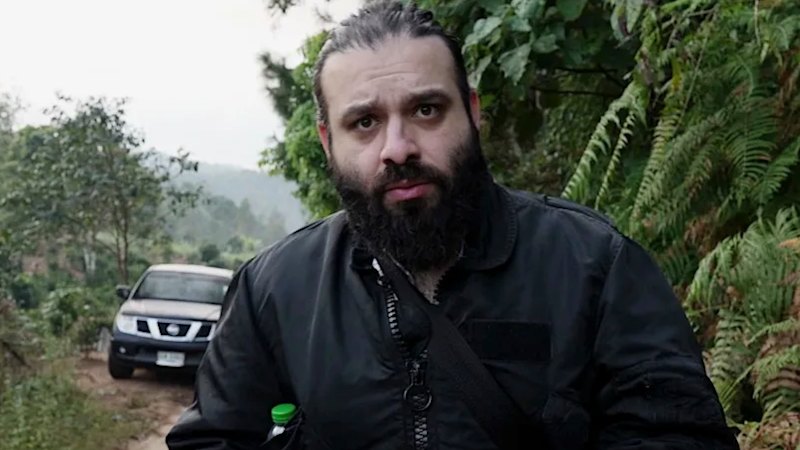
On Tuesday, after another broadside from his former colleagues at the ABC, via Media Watch, and mounting questions relating to his journalism during a four-year stint at the network, sacked reporter Mahmood Fazal came out swinging in his own defence, once again.
“One week I’m too involved in the street … the next week, I just got my mates to play roles … So which is it?” Fazal said, in an Instagram post captioned “Beethoven had his critics, too!”
What it appears that Fazal is missing, a handful of ABC staff have pointed out, is that it is not a case of one or the other. It is a case of both.
But like Beethoven, who was accused of taking heavy inspiration from Mozart when producing his finest work, Fazal is also now accused of doing the same, in being inspired by the work of another journalist to report the now-removed Meth Highway Four Corners episode. Fazal denies any wrongdoing.
On Background sources pointed out the episode – which was taken down after allegations surfaced over the veracity of the appearance of Fazal’s friend Ben Aitken as a meth cook named “Brendan” – is remarkably similar to the contents of a book Meth Road, published by Allen & Unwin just six months earlier.
Written by British journalist Conor Woodman and published in October 2023, the book traces Australia’s meth epidemic all the way back to its source in the jungles of Myanmar for the first time.
Not only does the episode have almost the same name and narrative arc, the two journalists begin their stories with an anonymous domestic meth cook in Australia, then find themselves in the border towns of Mae Sai and Tachileik, a popular smuggling passage at the Thailand and Myanmar border where they speak to a distributor, lab worker and others, focusing on the United Wa State Army, a militia with a stronghold in the area.
In some instances, the people both spoke to are the exact same, those being Jeremy Douglas from the United Nations Office on Drugs and Crime, and Khuensai Jaiyan, a local journalist and former PR officer for Khun Sa, a former drugs kingpin in the so-called Golden Triangle. Some other individual interviewees differ, though the organisations were the same, such as the Australian Federal Police, WA National Army and the American DEA.
Both discuss Khun Sa as the foundational figure in the meth trade in the area, trace the origins of the existing infrastructure back to the Laotian army generals, and both detail how tea packaging is used to smuggle drugs, to name a few more similarities.
No one “owns” a story. Many news outlets “follow” another’s investigations, when there is a valid story to tell. Some would argue that many of the subjects, locations and themes are the obvious ones to focus on, when tracing the routes of meth consumption in Australia.
Four Corners had a big news break in their episode, too, unmasking Daniel Rodney Badger, an Asian-based figure central to importing drugs to Australia.
Woodman tells On Background it is certainly a very similar story, but says it’s not uncommon for book authors to have their work later repurposed for souped-up television investigations.
Woodman was also not the first journalist to travel to the Golden Triangle to investigate the meth trade, but to properly investigate the routes direct to Australia, he was. When there are so many clear similarities, a hat tip, even begrudgingly, is usually expected to the journalist or outlet that was first. In this case, that was absent.